
An IRS USATAXPYMT, IRS USA TAX PAYMENT, IRS DES:USATAXPYMT, or similar entry on a checking or savings account usually identifies an electronic federal-tax payment withdrawn through the Internal Revenue Service and the U.S. Treasury.
The debit may have been scheduled through IRS Direct Pay, an IRS Online Account, tax-preparation software, a tax professional, EFTPS, a direct-debit installment agreement, or an electronically filed tax return. An entry labeled ACH HOLD IRS USATAXPYMT may be a pending or processing tax debit rather than a second completed payment.
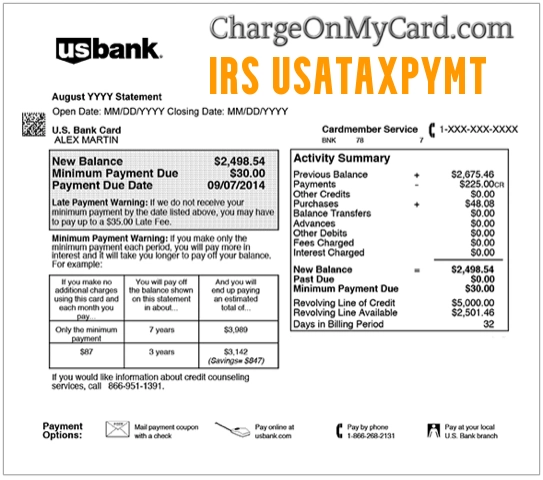
What Is IRS USATAXPYMT on a Bank Statement?
IRS USATAXPYMT is a shortened bank-statement description associated with an electronic payment made to the Internal Revenue Service.
The payment may be connected with:
- An individual federal income-tax balance
- An estimated-tax payment
- An extension payment
- An amended-return payment
- A payment made with an electronically filed return
- An IRS installment-agreement payment
- A business federal-tax deposit
- Employment or payroll taxes
- Corporate, partnership, trust, estate, gift, or excise taxes
- A tax payment scheduled by a spouse
- A payment submitted by a tax professional or payroll provider
- A payment made from a shared personal or business bank account
- A duplicate or incorrectly scheduled tax payment
- An unauthorized use of the bank account
The descriptor confirms the payment route but does not, by itself, reveal the taxpayer, tax form, tax year, filing status, business, payment confirmation number, or person who scheduled the withdrawal.
Common IRS USATAXPYMT Statement Variations
Banks may shorten, rearrange, or add ACH information to the description.
- IRS USATAXPYMT
- IRS USA TAX PAYMENT
- IRS USA TAX PYMT
- IRS-USATAXPYMT
- IRS/USATAXPYMT
- IRS DES:USATAXPYMT
- IRS DES USATAXPYMT
- ACH IRS USATAXPYMT
- ACH DEBIT IRS USATAXPYMT
- ACH HOLD IRS USATAXPYMT
- IRS USATAXPYMT PPD
- IRS USATAXPYMT CCD
- USATAXPYMT IRS
- USATAXPYMTSEC
- USATAXPYMTSEC:CCD
- BUSINESS TO BUSINESS ACH IRS USATAXPYMT
- PENDING IRS USATAXPYMT
- ELECTRONIC WITHDRAWAL IRS USATAXPYMT
Not every bank displays the same fields. Compare the amount, effective date, ACH code, bank account, tax-payment confirmation, and IRS payment history.
Is IRS USATAXPYMT a Credit Card Charge?
Usually, no.
The exact `IRS USATAXPYMT` wording is generally associated with an ACH or electronic funds withdrawal from a checking or savings account.
A federal-tax payment made by credit card, debit card, or digital wallet is normally handled through an approved third-party processor. The statement may show the processor’s name or another card-payment descriptor, and a separate processing fee may apply.
Check whether the transaction appears under:
- Checking-account activity
- Savings-account activity
- ACH withdrawals
- Electronic debits
- Credit-card purchases
- Debit-card purchases
If it appears on a card account rather than a bank account, ask the issuer for the complete merchant and processor information.
What Does ACH HOLD IRS USATAXPYMT Mean?
An ACH HOLD IRS USATAXPYMT entry usually means the bank has identified an incoming or processing IRS electronic debit and has placed it in a pending or hold status.
The word “hold” does not automatically mean:
- The IRS charged a separate fee
- The bank has completed the withdrawal
- There are two tax payments
- The IRS placed a levy on the account
- The payment has been successfully credited to the correct tax account
- The transaction was fraudulent
A pending ACH entry may:
- Become the completed tax payment
- Update with a longer descriptor
- Move from pending to posted
- Disappear if the debit is canceled or released
- Be returned if the account lacks sufficient funds
Do not count the pending hold and its completed replacement as two settled withdrawals unless both remain posted.
What Do PPD and CCD Mean?
IRS USATAXPYMT PPD
PPD generally identifies an ACH payment involving a consumer bank account.
An IRS USATAXPYMT PPD debit may relate to:
- An individual income-tax payment
- An estimated-tax payment
- A Direct Pay withdrawal
- An individual installment-agreement payment
- A payment submitted with a personal tax return
IRS USATAXPYMT CCD
CCD generally identifies a corporate or business ACH transaction.
An IRS USATAXPYMT CCD debit may relate to:
- A business federal-tax deposit
- Payroll or employment taxes
- A corporate tax payment
- A partnership or trust payment
- A business payment submitted through EFTPS
- A payment initiated by a payroll processor, accountant, bookkeeper, or tax professional
The PPD or CCD code does not identify the exact tax form, tax period, or taxpayer. Review the IRS or EFTPS payment record.
Which IRS Payment Methods Can Create This Debit?
IRS Direct Pay
Direct Pay allows individual and qualifying business taxpayers to make a federal-tax payment directly from a U.S. checking or savings account.
A Direct Pay payment may be used for:
- Balance due
- Estimated tax
- Extension payments
- Installment-agreement payments
- Amended returns
- Other eligible individual or business payment types
IRS Online Account
A taxpayer may pay through an IRS Individual Online Account or Business Tax Account.
The account may display:
- Pending payments
- Scheduled payments
- Completed payment history
- Balances due
- Installment-agreement information
Electronic Funds Withdrawal With an E-Filed Return
A taxpayer, tax-software user, or tax professional may schedule an Electronic Funds Withdrawal while electronically filing a return or extension.
The withdrawal may occur weeks or months after the return was prepared if a future payment date was selected.
EFTPS
The Electronic Federal Tax Payment System is commonly used by:
- Businesses
- Employers
- Individuals making larger or recurring payments
- Payroll providers
- Accountants and tax professionals
Direct-Debit Installment Agreement
A taxpayer with an IRS payment plan may authorize monthly automatic bank withdrawals.
A recurring IRS USATAXPYMT debit may therefore be a scheduled installment rather than a new tax charge.
Why Did the IRS Withdraw Money?
Possible explanations include:
- You scheduled a tax payment while filing a return.
- Your tax preparer scheduled the payment with your authorization.
- A Direct Pay payment reached its selected date.
- An estimated-tax payment was scheduled in advance.
- An extension payment became due.
- A monthly installment-agreement payment processed.
- A spouse used a shared bank account for a joint return.
- A business partner, accountant, payroll provider, or bookkeeper made a federal-tax deposit.
- A previous payment was resubmitted after being returned.
- Two payment methods were used for the same liability.
- The payment was scheduled for the wrong tax year or taxpayer.
- The bank account information was used without authorization.
How to Verify an IRS USATAXPYMT Debit
- Copy the complete bank-statement descriptor.
- Record the amount, effective date, and posting status.
- Determine whether the entry is pending, posted, returned, or reversed.
- Check the IRS Individual Online Account or Business Tax Account.
- Review pending, scheduled, and completed payments.
- Search email for IRS Direct Pay, EFTPS, tax software, tax-preparer, and payment confirmations.
- Review the electronically filed return and authorization forms.
- Ask a spouse or joint account holder.
- Ask the tax preparer whether an Electronic Funds Withdrawal was scheduled.
- For a business account, ask the accountant, payroll provider, bookkeeper, controller, or other authorized user.
- Compare the amount with estimated-tax vouchers, payroll deposits, notices, payment plans, and return balances.
- Contact the IRS when the payment cannot be matched.
- Contact the bank promptly when no authorized payment can be identified.
Official IRS payment and account resources:
- IRS payment options
- IRS Individual Online Account
- IRS Direct Pay Payment Lookup
- Electronic Federal Tax Payment System
How to Check an IRS Direct Pay Payment
Use the Direct Pay Payment Lookup with the confirmation number received when the payment was submitted.
The confirmation number can help you:
- View the payment details
- Check whether it is scheduled or processed
- Modify an eligible scheduled payment
- Cancel an eligible scheduled payment
A confirmation number confirms that the withdrawal request was submitted. It does not guarantee that the bank will successfully pay it.
A payment can fail because of:
- Insufficient funds
- Incorrect routing or account information
- A closed account
- A bank block
- A rejected account type
How to Cancel a Scheduled IRS Tax Payment
The correct cancellation method depends on how the payment was created.
Direct Pay
Use the Direct Pay Payment Lookup and the payment confirmation number. A scheduled payment generally must be changed or canceled at least two business days before the payment date.
Electronic Funds Withdrawal Submitted With an E-Filed Return
Call IRS e-file Payment Services:
Cancellation requests must generally be received no later than 11:59 p.m. Eastern time two business days before the scheduled withdrawal.
Payment information may not be available to the automated system until approximately 7–10 days after the return and withdrawal request were accepted.
EFTPS
Sign in to the official EFTPS account or use the official voice-response system:
Installment-Agreement Payment
Canceling or stopping one bank withdrawal does not necessarily cancel, revise, or terminate the IRS installment agreement.
Review the payment plan in the IRS Online Account or contact the IRS before changing a recurring payment.
What If the Payment Has Already Posted?
A completed tax payment normally cannot be canceled through the scheduled-payment tools.
Contact the IRS when:
- The payment was applied to the wrong tax year.
- The wrong form or payment type was selected.
- The payment was applied to the wrong spouse.
- The payment was submitted under the wrong taxpayer identification number.
- The amount was incorrect.
- Two payments were submitted.
- The bank shows the debit but the IRS account does not.
Prepare:
- The taxpayer’s name
- The payment date
- The amount
- The bank-account type
- The payment confirmation number
- The tax form
- The tax year or period
- The bank trace or ACH information when requested
Do not post these details publicly.
Why Are There Two IRS USATAXPYMT Debits?
Two transactions may represent:
- A pending ACH hold and its completed replacement
- A Direct Pay payment and an e-file withdrawal
- An estimated-tax payment and a separate balance-due payment
- Two different tax periods
- Individual and business tax payments
- A joint-return payment and a separate assessed amount
- A scheduled installment and a voluntary additional payment
- A payroll deposit and another business tax payment
- A payment submitted by both the taxpayer and tax preparer
- An actual duplicate completed withdrawal
- Repeated unauthorized bank-account use
Compare the confirmation number, tax year, form, payment reason, amount, and transaction status before reporting a duplicate.
What If the IRS Payment Was Returned?
A bank may return an electronic federal-tax payment because of:
- Insufficient funds
- An incorrect routing number
- An incorrect bank-account number
- A closed or frozen account
- A stop-payment order
- A bank restriction on the account
A returned payment may:
- Leave the tax unpaid
- Result in a dishonored-payment penalty
- Generate bank fees
- Affect an installment agreement
- Cause additional interest or penalties to accrue
- Result in an IRS notice
Official information:
IRS dishonored-payment penalty information
What If No One Authorized the Withdrawal?
- Confirm that it is a completed debit rather than a pending hold.
- Ask every owner and authorized user of the account.
- Review recently filed returns and tax-payment authorizations.
- Contact the tax preparer or payroll provider.
- Check IRS and EFTPS payment history.
- Call the IRS using an official number.
- Ask the bank for the complete ACH company name, identification, and trace details.
- Report the withdrawal to the bank promptly if no authorization can be found.
- Ask whether additional withdrawals are scheduled.
- Ask whether the bank account requires additional protection or replacement.
Do not assume an unexpected IRS debit is a levy. The `USATAXPYMT` descriptor is officially associated with electronic tax payments. The IRS and bank must review the specific transaction to determine who initiated it.
Stopping or disputing a payment that was actually authorized can leave the federal tax unpaid. Verify the tax account and payment route before requesting a reversal whenever possible.
Current IRS Contact Information
- Individual tax account assistance: 1-800-829-1040
- Business and specialty tax assistance: 1-800-829-4933
- E-file electronic payment inquiry or cancellation: 1-888-353-4537
- EFTPS voice-response system: 1-800-555-3453
- IRS help and telephone hours: IRS help and contact information
- Official payment page: IRS.gov Payments
- Official website: IRS.gov
Use only IRS.gov, EFTPS.gov, official tax-software records, the number on an IRS notice, or the bank’s verified support route. Avoid tax-support numbers shown in search advertisements, unsolicited text messages, pop-ups, or social-media replies.
IRS Payment and Refund Scam Warning
The IRS does not demand federal-tax payments through gift cards.
Be cautious when someone unexpectedly:
- Threatens immediate arrest
- Demands a gift card or cryptocurrency payment
- Requests remote access to a computer or phone
- Asks for a bank password or one-time security code
- Offers to cancel an IRS payment for an upfront fee
- Claims a refund must be released through a third party
- Sends an unofficial IRS login link
Official scam information:
Taxpayer and Banking Privacy Warning
Do not post:
- Social Security numbers
- Employer identification numbers
- IRS Online Account credentials
- EFTPS PINs or passwords
- Tax-return copies
- Bank-account or routing numbers
- ACH trace numbers
- Direct Pay confirmation numbers
- Installment-agreement numbers
- IRS notice barcodes
- Dates of birth
- Income or payroll information
- Authentication or security codes
Consumer Reports and Experiences
There are currently two visible public reports on this ChargeOnMyCard.com page.
One commenter reported a `PPD IRS USATAXPYMT` debit of $2,593. A second commenter reported a $420 withdrawal and asked why it occurred.
The reports do not establish:
- Who scheduled either payment
- Whether a return had recently been filed
- Whether Direct Pay or EFTPS was used
- Whether an installment agreement existed
- Whether a spouse, preparer, payroll provider, or business user authorized the debit
- Which tax form or year was involved
- Whether either payment was reversed or correctly credited
- Whether either withdrawal was fraudulent
- The final IRS or bank resolution
ChargeOnMyCard.com cannot:
- Access IRS or EFTPS accounts
- Identify a taxpayer from a bank transaction
- Cancel a tax payment
- Move a payment to another tax year
- Modify an installment agreement
- Issue a tax refund
- Trace a payment through the Treasury
- Submit a bank dispute
Frequently Asked Questions About IRS USATAXPYMT
What is IRS USATAXPYMT on my bank statement?
It usually identifies an electronic federal-tax payment withdrawn from a checking or savings account.
Is IRS USATAXPYMT legitimate?
It is an official type of IRS and Treasury payment descriptor. The specific withdrawal still needs to be verified to confirm that it was authorized and applied correctly.
What does ACH HOLD IRS USATAXPYMT mean?
It generally indicates that the bank is showing an IRS ACH debit as pending or processing. It is not necessarily a second completed withdrawal.
What does IRS USATAXPYMT PPD mean?
It usually means the federal-tax ACH payment involved a consumer bank account.
What does IRS USATAXPYMT CCD mean?
It usually means the federal-tax ACH payment involved a corporate or business account.
Could my tax preparer have scheduled it?
Yes. An Electronic Funds Withdrawal can be scheduled when a return is electronically filed through tax software or a tax professional.
Could it be an estimated-tax payment?
Yes. Estimated payments can be scheduled in advance and may appear months after the payment request was entered.
Could it be a monthly IRS payment plan?
Yes. A direct-debit installment agreement can create recurring IRS bank withdrawals.
Can I cancel the payment?
A scheduled payment may be cancelable if the applicable deadline has not passed. The method depends on whether it was made through Direct Pay, EFW, EFTPS, or an installment agreement.
Why is the payment not showing in my IRS account?
The payment may still be processing, may have been submitted under another taxpayer, or may have been directed to a different tax year or form. Save the bank record and contact the IRS if it remains missing.
What if the bank returned the payment?
The tax may remain unpaid, and the IRS may assess a dishonored-payment penalty. Contact the IRS and bank promptly.
Is this an IRS levy?
The descriptor is officially associated with electronic tax payments. It does not, by itself, prove that a levy occurred.
Can ChargeOnMyCard.com identify the taxpayer or cancel the payment?
No. ChargeOnMyCard.com has no access to IRS, Treasury, EFTPS, tax-software, bank, or taxpayer records.
Related Tax, ACH, and Electronic Payment Guides
- PNP BILLPAYMENT Charge: Utility, Government, Property-Tax, and ACH Payment Help
- TPG Products Deposit: Tax Refund, Tax-Preparation Fee, and Bank Account Help
- ADVS ED SERV PPD STUDNTLOAN: Aidvantage ACH Debit and Auto Pay Help
- CARDMEMBER SERV WEB PYMT: Online ACH Credit-Card Payment Help
- How to Investigate an Unrecognized Credit Card, Debit Card, ACH, or Bank Charge
Tax, government, loan, and bill-payment transactions may display an agency, abbreviated originator, processor, ACH code, payment route, telephone number, or tax-payment description rather than the account or tax form the payer remembers.
Help Other Taxpayers Identify an IRS USATAXPYMT Debit
If you identified an IRS USATAXPYMT, IRS DES:USATAXPYMT, ACH HOLD IRS USATAXPYMT, or similar entry, please share what payment route it represented.
Helpful nonprivate details include:
- The shortened descriptor without identification or trace numbers
- The general amount
- Whether the entry was pending or completed
- Whether it was PPD or CCD
- Whether it came from Direct Pay, EFTPS, tax software, a preparer, or an installment agreement
- Whether it was an individual or business payment
- Whether a duplicate was corrected
- Whether the IRS located the payment
- How the bank resolved an unauthorized debit
Do not post Social Security numbers, employer identification numbers, tax forms, tax years connected with named individuals, IRS confirmation numbers, bank-account numbers, ACH trace numbers, income information, passwords, PINs, or authentication codes.
Why Rely on ChargeOnMyCard.com?
ChargeOnMyCard.com researches confusing credit-card, debit-card, ACH, federal-tax, electronic-payment, pending-authorization, refund, and bank-statement descriptors using current official agency information, payment-system terminology, statement evidence, consumer resources, and visible public reports.
We distinguish an IRS electronic payment descriptor from the taxpayer, return, tax year, payment method, tax professional, payroll provider, bank, card processor, installment agreement, duplicate payment, or potentially unauthorized withdrawal connected with the transaction.
Last reviewed: July 15, 2026.
Disclaimer
ChargeOnMyCard.com is not affiliated with the Internal Revenue Service, U.S. Department of the Treasury, Bureau of the Fiscal Service, EFTPS, any tax professional, tax-software provider, payroll provider, taxpayer, bank, credit union, ACH operator, payment processor, card network, or financial institution. This article is provided for informational purposes only and is not tax, financial, legal, accounting, payment-plan, refund, dispute, account-security, or fraud-prevention advice. Contact the IRS, the applicable tax professional, and the financial institution directly regarding a specific transaction.