
If you found a PNP BILLPAYMENT charge on your credit card, debit card, ACH activity, or bank statement, it usually means a payment was processed through Plug’n Pay Technologies Inc., an online payment-processing company.
The charge may appear as PNP BILLPAYMENT, PNP bill payment, ACH debit PNP BILLPAYMENT, or a similar descriptor. In many cases, PNP is not the company you bought from. It is the payment processor used by a utility, city, county, government office, property-tax office, service provider, merchant, or online bill-payment portal.
If you do not recognize the charge, compare the amount and date with recent bills you paid online, including utility bills, property taxes, permits, license fees, municipal payments, insurance bills, or other service payments.
Consumer Reports and Experiences
Consumers commonly report seeing PNP BILLPAYMENT after paying a bill online and not recognizing the processor name on the statement.
Common searches include what is PNP bill payment, PNP bill payment charge, PNP bill payment meaning, and ACH debit PNP BILLPAYMENT. These searches usually happen when the statement does not clearly show the actual biller, such as a city, county, utility, tax collector, local agency, or service provider.
Some users report that the payment was for:
- Electric or gas utility bills
- Water, sewer, trash, or sanitation bills
- Property taxes
- Local government fees
- Building permits or licensing fees
- Parking, code, or municipal payments
- Insurance or service-provider bills
- Online merchant payments
- ACH or e-check payments
- Refunds or adjustments connected to a prior online payment
Have you identified a PNP BILLPAYMENT charge? Share the amount, descriptor, bill type, city or company involved if known, and how you confirmed it in the comments below. Do not post your full card number, bank account number, tax parcel number, utility account number, confirmation number, address, or other private information.
What Is PNP BILLPAYMENT?
PNP BILLPAYMENT is most commonly a billing descriptor for a transaction processed through Plug’n Pay, a payment gateway and payment-processing company.
Plug’n Pay helps businesses and organizations accept electronic payments, including credit card, debit card, and ACH payments. When a merchant uses Plug’n Pay, the customer’s statement may show PNP BILLPAYMENT instead of the merchant name the customer expected.
A PNP BILLPAYMENT charge may be connected to:
- A utility bill
- A municipal or government payment
- A property-tax payment
- A permit, license, or court-related payment
- A medical, insurance, or service-provider payment
- A school, county, or local-agency payment
- An online merchant payment
- A recurring bill payment
- An ACH debit or electronic-check payment
- A refund, reversal, or adjustment
The important point is that PNP usually identifies the payment processor. You still need to determine which biller, merchant, agency, or account caused the charge.
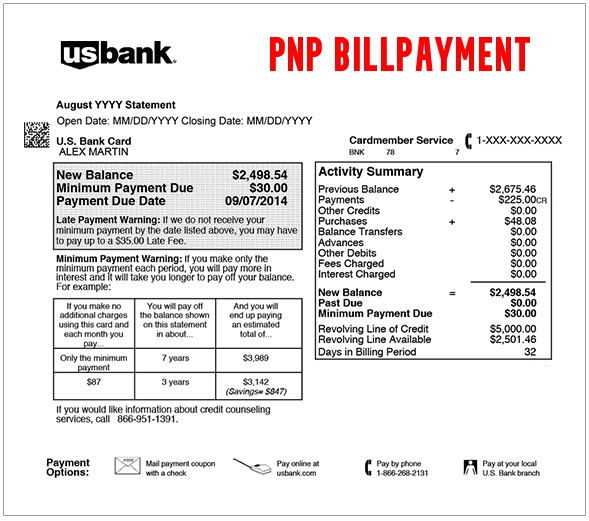
PNP Bill Payment Meaning
The PNP bill payment meaning is usually “Plug’n Pay bill payment.” It means your card, debit card, or bank account was used to make a payment through a Plug’n Pay-powered checkout or bill-payment portal.
The charge does not always mean you bought something directly from Plug’n Pay. Instead, it may mean Plug’n Pay processed a payment for another organization.
For example, a city, county, utility, or service provider may use Plug’n Pay to accept online payments. Your statement may then show PNP BILLPAYMENT rather than the name of the city, utility, or agency.
Common PNP BILLPAYMENT Statement Variations
The same type of transaction may appear in several different ways depending on your bank, biller, payment method, or processor:
- PNP BILLPAYMENT
- PNP billpayment
- PNP bill payment
- PNP bill payment charge
- PNP bill payment meaning
- What is PNP bill payment
- ACH debit PNP BILLPAYMENT
- Electronic withdrawal PNP BILLPAYMENT
- PNP BILL PAYMENT CO ENTRY
- PNP bill payment property tax
- PNP BILLPAYMENT King County
- PNP BILLPAYMENT Colorado
- PNP BILLPAYMENT Michigan
- PNP BILLPAYMENT New Mexico
- PNP BILLPAYMENT California
- Bill payment MI
- PNPECKRFND
- PNP followed by a merchant, reference number, or phone-style number
- 3333308324
- 8888916064
If your statement shows a number such as 3333308324 or 8888916064, treat it as a possible descriptor, reference, or processor-related identifier unless your bank confirms it is a phone number. Do not call or trust an unfamiliar number without verifying it through your bank or the official merchant website.
What Is PNPECKRFND?
PNPECKRFND may be connected to a PNP electronic-check refund, reversal, or refund-related transaction. The exact meaning can vary by bank and processor formatting.
If you see PNPECKRFND, check whether you recently:
- Overpaid a bill
- Received a refund from a city, county, utility, or agency
- Had an ACH or e-check payment reversed
- Canceled a payment
- Received an adjustment from an online bill-payment portal
If the credit or debit does not match a known refund or bill payment, ask your bank for the full transaction details.
Why Is PNP BILLPAYMENT Charging Me?
You Paid a Utility Bill
Many consumers report seeing PNP BILLPAYMENT after paying electric, gas, water, sewer, trash, or sanitation bills online.
Check recent payments made to:
- Electric companies
- Gas companies
- Water utilities
- Trash or sanitation departments
- Municipal utility districts
- Local government payment portals
You Paid Property Taxes or Government Fees
PNP BILLPAYMENT may appear after paying property taxes, local fees, permits, licenses, fines, or other government-related bills through an online payment portal.
Search your records for:
- Property tax payments
- County treasurer payments
- City or township payments
- Building permits
- Business licenses
- Pet licenses
- Court, parking, or code-related payments
You Made an ACH or E-Check Payment
If the statement says ACH debit PNP BILLPAYMENT, the payment may have come from a checking account rather than a credit card.
This could happen if you entered routing and account information on a bill-payment website or selected an e-check option.
You Paid Through a Third-Party Portal
Some organizations outsource online payment processing. The website may have shown the name of a city, utility, or service provider, but your bank statement may show the payment processor.
This is one of the most common reasons the charge looks unfamiliar.
Another Authorized User Made the Payment
A spouse, roommate, family member, employee, bookkeeper, tenant, property manager, or other authorized user may have paid a bill using your card or bank account.
Ask about recent utility, property-tax, license, or government payments before assuming the charge is fraudulent.
The Charge May Be Unauthorized
If no authorized user recognizes the payment and you cannot match it to a bill, contact your bank or card issuer promptly.
Because PNP BILLPAYMENT may involve ACH, debit-card, or checking-account activity, quick action is important if the transaction is unauthorized.
How to Identify a PNP BILLPAYMENT Charge
1. Compare the Amount and Date
Start by comparing the amount and date with recent bills you paid online.
Look at:
- Utility bills
- Property-tax records
- County or city payment receipts
- Permit or license payments
- Insurance or service bills
- ACH payment confirmations
- Email receipts
- Bank alerts
2. Search Your Email
Search every email account you use for:
- PNP BILLPAYMENT
- PNP bill payment
- Plug’n Pay
- Plugnpay
- Payment confirmation
- Bill payment
- Property tax
- Utility payment
- ACH debit
- E-check
- Receipt
- The exact amount charged
3. Check Bill-Payment Portals
Sign in to the account or website where you usually pay bills.
Review:
- Payment history
- Confirmation numbers
- Card or ACH details
- Processing fees
- Refunds or reversals
- Recurring payment settings
4. Ask Other Authorized Users
Ask anyone who may have access to the card, bank account, utility account, property-tax account, or household bills.
PNP BILLPAYMENT is often identified only after another household or business user remembers paying a bill online.
5. Ask Your Bank for Full Merchant Details
Your bank or card issuer may be able to provide more than the shortened descriptor.
Ask for:
- The full merchant descriptor
- The merchant category
- The payment processor
- The ACH company ID if applicable
- Whether the transaction was credit, debit, ACH, or e-check
- Whether it was online, phone-based, or recurring
- Whether a merchant phone number or reference code is available
Plug’n Pay Contact Information
If you believe the charge was processed by Plug’n Pay, use the official Plug’n Pay contact information below.
- Support email: support@plugnpay.com
- Sales email: sales@plugnpay.com
- Support phone: 631-761-0159
- Toll-free phone: 800-945-2538
- Official website: PlugnPay.com
- Support page: Plug’n Pay Support
- Contact page: Plug’n Pay Contact
- Mailing address: Plug & Pay Technologies Inc., 1019 Ft. Salonga Rd, Ste 10 – #395, Northport, NY 11768
When contacting support, provide the date, amount, statement descriptor, and limited payment details requested by support. Do not send your full card number, full bank account number, online-banking password, PIN, or card security code.
What If Plug’n Pay Cannot Identify the Merchant?
Plug’n Pay may be able to help route or investigate a transaction, but the actual merchant, utility, city, county, agency, or service provider may still be the party responsible for the bill.
Use this general rule:
- Processor descriptor, payment route, or transaction lookup: Contact Plug’n Pay or your bank.
- Bill amount, service issue, account credit, or utility balance: Contact the actual biller or merchant.
- Unauthorized transaction or suspected fraud: Contact your bank or card issuer immediately.
How to Dispute or Correct a PNP BILLPAYMENT Charge
If the charge may be legitimate but the amount looks wrong:
- Find the original bill or invoice.
- Check whether a processing fee was added.
- Review the payment confirmation email.
- Sign in to the biller’s payment portal.
- Ask the biller whether the payment was received.
- Contact Plug’n Pay if the processor details are unclear.
- Ask your bank for the full merchant and ACH details.
- Request correction or refund from the biller if the payment was duplicated or misapplied.
- Dispute the transaction with your bank if no valid payment can be found.
Keep copies of receipts, screenshots, confirmation emails, utility-account records, property-tax receipts, refund promises, and bank dispute case numbers.
Is the PNP BILLPAYMENT Charge Fraudulent?
Not necessarily. Many PNP BILLPAYMENT transactions are legitimate online bill payments processed through Plug’n Pay.
The charge should be investigated as potentially unauthorized if:
- You did not recently pay a bill online
- No authorized user recognizes the payment
- The amount does not match any bill or tax payment
- The transaction appears as ACH debit and you did not authorize bank-account use
- The biller says no payment was received
- Multiple PNP BILLPAYMENT charges appear unexpectedly
- The charge repeats after cancellation
- The transaction appears with unfamiliar numbers or references your bank cannot explain
- Your card or bank account may have been compromised
What to Do If You Did Not Authorize the Charge
- Check whether the charge is pending or posted.
- Search your email for payment confirmations.
- Ask all authorized card or bank-account users whether they paid a bill.
- Contact the biller if you can identify one.
- Ask your bank for full merchant, ACH, and processor details.
- Contact Plug’n Pay using official contact information if appropriate.
- Temporarily lock the card or account if fraud is suspected.
- Dispute the transaction through your bank or card issuer.
- Ask whether the card or account number should be replaced.
- Monitor for additional unfamiliar payments.
Bill Payment and Utility Scam Warning
Scammers sometimes impersonate utilities, city offices, tax collectors, court offices, and bill-payment processors.
Be cautious if someone:
- Threatens immediate service shutoff unless you pay
- Demands gift cards, cryptocurrency, wire transfers, or payment apps
- Uses a strange payment link or unfamiliar domain
- Claims you owe a tax, permit, or utility bill you cannot verify
- Asks for your full bank login, PIN, or card security code
- Claims a refund requires remote access to your device
- Calls from a number you cannot verify through the official company or agency website
Use the official website printed on your bill, not a link from an unexpected text or email.
How Consumers Resolved the Charge
Consumers commonly resolve PNP BILLPAYMENT charges by:
- Matching the amount to a utility bill
- Finding a property-tax payment receipt
- Identifying a city, county, or municipal payment
- Finding an ACH or e-check confirmation
- Confirming that another household member paid the bill
- Identifying a card-processing or convenience fee
- Contacting the biller to confirm the payment
- Contacting Plug’n Pay for processor guidance
- Getting full merchant details from the bank
- Disputing the charge when no valid bill payment can be identified
Frequently Asked Questions
What is PNP bill payment?
PNP bill payment usually means an online bill payment processed through Plug’n Pay. The actual payment may be for a utility, city, county, tax office, service provider, or online merchant.
What is PNP BILLPAYMENT on my bank statement?
PNP BILLPAYMENT on a bank statement usually means a bill or merchant payment was processed through Plug’n Pay. Check recent bills and payment confirmations to identify the actual biller.
What is a PNP bill payment charge?
A PNP bill payment charge is usually a credit card, debit card, ACH, or e-check transaction processed by Plug’n Pay for another company or agency.
What is the PNP bill payment meaning?
The PNP bill payment meaning is usually “Plug’n Pay bill payment.” It means Plug’n Pay handled the payment processing, while the actual bill may belong to a utility, government office, tax collector, merchant, or service provider.
What is ACH debit PNP BILLPAYMENT?
ACH debit PNP BILLPAYMENT usually means a bank-account or e-check payment was processed through Plug’n Pay. Review your online bill-payment records and contact your bank if it was not authorized.
What is PNPECKRFND?
PNPECKRFND may indicate a PNP e-check refund, refund-related transaction, reversal, or adjustment. Confirm with your bank, the original biller, or Plug’n Pay if the refund is unfamiliar.
Is PNP BILLPAYMENT Plug’n Pay?
In many cases, yes. PNP commonly refers to Plug’n Pay, a payment-processing company used by merchants and organizations to accept online payments.
Why does my statement not show the utility or city name?
Your statement may show the payment processor instead of the biller. The payment portal may have used Plug’n Pay to process the transaction.
Can PNP BILLPAYMENT be property tax?
Yes. Some property-tax, county, municipal, and government payments may be processed through third-party payment systems and appear under a processor descriptor.
Should I dispute a PNP BILLPAYMENT charge?
First check recent bills, payment confirmations, authorized users, and your bank’s merchant details. Dispute it promptly if no valid payment or authorization can be found.
Related Credit Card and Bank Charges
- CPE/BMC Houston Charge
- FPL Direct Debit Elec Pymt Charge
- ACHMA VISB BILL PYMNT Charge
- ADVS ED SERV PPD Aidvantage Student-Loan Payment
- FID BKG SVC LLC MONEYLINE Charge
- 700 Nicollet Mall Charge – Is It Sezzle?
- TBE Bradford Online Charge
- Segpay Charge on Credit Card
Related Consumer Resources
- Concerned about a fake utility bill, tax payment, shutoff threat, or suspicious payment link? Visit ThinkItsAScam.com for scam warnings and consumer reports.
- Need customer-service contact information for utilities, payment processors, tax offices, or service providers? Search CustomerServiceNumbers.com.
- Looking for a company headquarters address, corporate office, or mailing information? Visit CorporateOfficeHeadquarters.com.
- Want to share a billing complaint, payment experience, or company review? Visit ZeroStars.org.
Why Trust ChargeOnMyCard.com?
ChargeOnMyCard.com helps consumers identify confusing credit-card, debit-card, ACH, e-check, and bank-statement descriptors using official company resources, payment information, and reports from cardholders.
Reader comments are especially useful for PNP BILLPAYMENT because the same processor descriptor may be used by many different utilities, local agencies, tax offices, merchants, and service providers.
Share Your PNP BILLPAYMENT Experience
Did your charge match PNP BILLPAYMENT, PNP bill payment, ACH debit PNP BILLPAYMENT, PNPECKRFND, a utility bill, property tax, municipal payment, service fee, refund, or unauthorized transaction? Share the amount, full descriptor, biller if known, and how you resolved it below. Please exclude private account and payment information.
Disclaimer
ChargeOnMyCard.com is an independent consumer-information website and is not affiliated with Plug’n Pay Technologies Inc., PNP BILLPAYMENT, any utility, government agency, merchant, payment processor, card network, bank, or financial institution. Verify individual transactions directly with the biller, Plug’n Pay when appropriate, and your card issuer or bank.