
A TLG*IDPROT charge, WF TLG IDPROT T charge, or TLG*IDPROT 877-816-8243 charge on a credit card, debit card, checking account, or bank statement likely relates to an identity-protection or credit-monitoring membership administered by Trilegiant.
The descriptor has historically been associated with a Wells Fargo-branded identity-theft protection program. It may represent a membership trial, automatic monthly renewal, credit-monitoring service, identity-protection plan, or another partner-branded Trilegiant membership. Because this appears to be a legacy descriptor, verify the exact program before using any cancellation number.
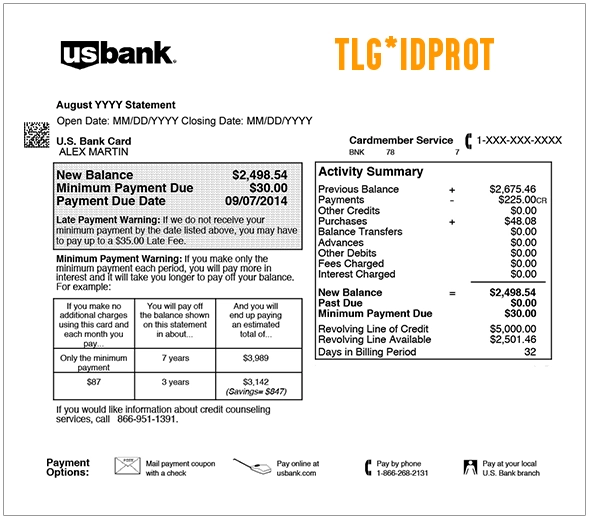
What Is the TLG*IDPROT Charge?
The statement wording appears to combine abbreviations connected with an identity-protection membership:
- WF: Likely refers to Wells Fargo when it appears in the full descriptor.
- TLG: Refers to Trilegiant.
- IDPROT: Likely means identity protection.
- 877-816-8243: A telephone number historically associated with the identity-protection program.
The payment may represent:
- A Wells Fargo-branded identity-protection membership
- A membership administered by Trilegiant
- A trial or introductory offer that became paid service
- An automatic monthly membership renewal
- Credit monitoring
- Identity-fraud assistance
- Access to credit reports or scores
- A membership enrolled under another email address
- A membership opened by another authorized household member
- An unauthorized recurring payment
The statement descriptor does not identify the enrolled member, exact plan, enrollment date, trial terms, renewal price, or account email.
Is TLG*IDPROT Connected With Wells Fargo?
The full wording WF TLG IDPROT T strongly suggests a Wells Fargo-related identity-protection membership administered by Trilegiant.
Historical information links the telephone number 877-816-8243 with Wells Fargo Select Identity Theft Protection, a membership service provided in conjunction with Trilegiant.
This does not mean that every current TLG*IDPROT transaction is a new Wells Fargo product. The descriptor may remain attached to:
- An older membership that continued renewing
- A legacy billing account
- A partner-branded Trilegiant membership
- An account originally opened through Wells Fargo
- A billing record that retained the older program name
Wells Fargo’s current public support pages do not clearly define this legacy descriptor. Verify the transaction through the bank, membership records, and Trilegiant before assuming the exact current product.
Is TLG*IDPROT the Same as PrivacyGuard?
Not necessarily.
PrivacyGuard is a current credit-monitoring and identity-protection service operated by Trilegiant. However, TLG*IDPROT and TLG PRIVGRD are different statement descriptors.
- TLG*IDPROT: Appears connected with a legacy or partner-branded identity-protection membership.
- TLG PRIVGRD: More directly identifies a PrivacyGuard membership.
Do not use PrivacyGuard cancellation instructions until you confirm that the membership is actually PrivacyGuard.
Common TLG*IDPROT Statement Variations
The charge may appear as:
- TLG*IDPROT
- TLG IDPROT
- WF TLG IDPROT T
- WF TLG IDPROT
- TLG*IDPROT 877-816-8243
- TLG IDPROT 8778168243
- TLG*IDPROT 877 CT
- TLG*IDPROT APR
- TLG ID PROTECT
- TLG ID PROTECTION
- TRILEGIANT ID PROT
- PENDING TLG*IDPROT
- CHECKCARD TLG*IDPROT
- CHKCARD TLG IDPROT
- MISC DEBIT TLG*IDPROT
- RECURRING PAYMENT TLG IDPROT
Banks may remove punctuation, shorten the merchant wording, add a telephone number, or display only part of the membership name.
What Is 877-816-8243?
The number 877-816-8243 was historically associated with the Wells Fargo and Trilegiant identity-protection program and its cancellation process.
The number remains important because:
- It appears in search queries and older membership materials.
- It may appear within the full statement descriptor.
- It can help distinguish TLG*IDPROT from an unrelated merchant.
Its current routing has not been independently confirmed through Wells Fargo’s present public support pages. Treat it as a legacy program clue rather than the primary current Wells Fargo support number.
For current Wells Fargo account or fraud assistance, use:
You may also call the trusted number printed on the back of the Wells Fargo card or shown after signing in to the official Wells Fargo app.
Why Did the Membership Start Charging Me?
Possible explanations include:
- An introductory or free period ended.
- A low-cost trial converted into a paid membership.
- The membership renewed automatically.
- An older identity-protection plan remained active.
- A family member enrolled in the service.
- The membership was opened under a different email address.
- The service was included with another financial offer and later became paid.
- The card or bank information was used without authorization.
Identity-protection memberships are often recurring services. Stopping use of the service or ignoring membership emails does not necessarily cancel future renewal.
How to Verify a TLG*IDPROT Charge
- Copy the complete statement descriptor.
- Record the amount and transaction date.
- Determine whether the entry is pending or completed.
- Review older statements for repeated TLG*IDPROT charges.
- Search all email accounts for Wells Fargo, Trilegiant, IDPROT, identity protection, credit monitoring, or membership.
- Check mailed enrollment and renewal notices.
- Ask a spouse or other authorized account user.
- Call Wells Fargo through an official number.
- Ask whether the transaction can be matched to an identity-protection membership.
- Contact the program administrator shown in the membership materials.
- Contact the financial institution if no authorized membership can be identified.
Search email for:
- TLG
- Trilegiant
- IDPROT
- Identity Protection
- Identity Theft Protection
- Wells Fargo Select
- Credit Monitoring
- PrivacyGuard
- Membership Renewal
- The exact charged amount
How to Cancel Future TLG*IDPROT Charges
First determine which membership or partner program is billing the account.
If the Membership Is Connected With Wells Fargo
- Call Wells Fargo using 1-800-869-3557 or the number on the back of the card.
- Provide the complete TLG*IDPROT descriptor.
- Ask whether Wells Fargo can identify the partner membership.
- Ask for the current membership administrator and cancellation route.
- Request that future recurring billing be stopped.
- Ask for written cancellation confirmation.
- Monitor the next statement.
If the Membership Is Confirmed as PrivacyGuard
Current PrivacyGuard cancellation options include:
- Customer service: 1-800-374-8273
- Email: service@privacyguard.com
- Online: Use the cancellation link in the signed-in PrivacyGuard account
- Mail: PrivacyGuard, P.O. Box 6100, Westerville, OH 43086-6100, Attention: Membership Department
Only use these PrivacyGuard details after confirming the membership is PrivacyGuard rather than another partner-branded Trilegiant service.
Does Canceling Automatically Provide a Refund?
Not necessarily.
Canceling generally prevents future renewal. It may not automatically reverse a payment that has already completed.
Ask for a refund review when:
- A trial converted without the cardholder realizing it.
- The latest renewal occurred recently.
- The service was not used after renewal.
- The membership had previously been canceled.
- Two completed payments appear.
- The amount differs from the disclosed price.
- The cardholder never authorized enrollment.
Ask the company to confirm:
- The enrollment date
- The original offer
- The trial period
- The renewal frequency
- The account email
- The cancellation date
- Whether a full or partial refund will be issued
Suggested Cancellation and Refund Request
I am contacting you about a TLG*IDPROT or WF TLG IDPROT charge dated [date] for [amount]. Please identify the exact membership, enrollment date, account email, trial terms, renewal frequency, and billing authorization connected with this transaction. Please cancel all future renewal and confirm the cancellation in writing. I am also requesting a refund review because [brief explanation].
Do not include a complete card number, bank-account number, Social Security number, credit-report information, password, PIN, CVV, or authentication code in an unsecured email.
Why Are There Multiple TLG*IDPROT Charges?
Multiple transactions may represent:
- Several monthly renewals
- More than one membership
- Separate memberships for different household members
- A pending authorization and the completed payment
- A failed payment followed by another attempt
- An actual duplicate completed charge
- Repeated unauthorized billing
Review several months of statements to determine how long the billing has continued and whether the amount changed.
What Is a Pending TLG*IDPROT Charge?
A pending transaction may:
- Become the completed membership payment
- Update with a longer descriptor
- Disappear after an authorization reversal
- Be replaced after another billing attempt
Do not automatically count a pending entry and its completed replacement as two settled transactions.
What If You Never Enrolled?
- Save the complete descriptor, amount, and date.
- Ask other authorized account users.
- Search all email and mailed membership records.
- Contact Wells Fargo through an official number.
- Contact the identified membership administrator.
- Ask for the enrollment date and authorization method.
- Cancel any unidentified recurring membership.
- Lock the card if additional suspicious activity appears.
- Notify the financial institution promptly.
- Ask whether the card or bank-account credentials should be replaced.
A genuine Trilegiant descriptor does not prove that the cardholder personally authorized the enrollment.
Credit Card Dispute Guidance
Contact the credit-card issuer promptly when:
- No authorized membership can be identified
- The card was used without permission
- An actual duplicate completed charge remains unresolved
- Billing continued after confirmed cancellation
- The amount differs from the disclosed membership price
- The administrator cannot locate the membership
- A promised refund does not appear
Keep the statements, enrollment documents, cancellation confirmation, refund request, and company response.
Official guidance:
CFPB credit-card dispute guidance
Debit Card and Bank Account Guidance
Report an unauthorized debit-card or bank-account transaction immediately.
Ask the financial institution:
- Whether the payment is marked as recurring
- Whether another TLG authorization is pending
- Whether the payment used a card or checking-account authorization
- Whether future merchant debits can be blocked
- Whether the card or account number should be replaced
- What documentation is required for the claim
Official guidance:
CFPB unauthorized debit and bank-transaction guidance
Credit-card, debit-card, and checking-account protections and dispute procedures differ.
Protect Your Identity and Financial Information
An identity-protection membership may involve highly sensitive information. Do not place private details in a public comment.
Do not post:
- A Social Security number
- A credit-report number or report contents
- A membership number
- A complete card or bank-account number
- A date of birth
- A driver’s-license or passport number
- An account email
- A password, PIN, CVV, or authentication code
- Identity-theft documents or police reports
Consumer Reports and Experiences
There are currently zero visible public reviews on this ChargeOnMyCard.com page.
ChargeOnMyCard.com has not received visible cardholder confirmation establishing:
- The exact current identity-protection product
- Whether a trial or promotional enrollment was involved
- The recurring membership amount
- Whether the membership was canceled
- Whether a refund was issued
- Whether any reported payment was unauthorized
ChargeOnMyCard.com cannot:
- Access Trilegiant, Wells Fargo, or PrivacyGuard memberships
- View credit reports
- Cancel an identity-protection membership
- Issue a refund
- Replace a payment card
- Submit a bank dispute
Frequently Asked Questions About TLG*IDPROT
What is TLG*IDPROT on my bank statement?
It likely identifies an identity-protection or credit-monitoring membership administered by Trilegiant.
What does WF TLG IDPROT T mean?
The WF prefix likely refers to Wells Fargo, TLG refers to Trilegiant, and IDPROT likely means identity protection.
What is 877-816-8243?
The number was historically associated with a Wells Fargo and Trilegiant identity-protection program. Its current routing should be verified before relying on it for support.
Is TLG*IDPROT the same as PrivacyGuard?
Not automatically. PrivacyGuard is operated by Trilegiant, but TLG*IDPROT and TLG PRIVGRD are distinct statement descriptors.
Is the charge recurring?
It may be. Identity-protection memberships are commonly billed on a recurring basis until canceled.
How do I cancel it?
Contact Wells Fargo through its official number and ask it to identify the partner membership. Then use the cancellation route provided by the confirmed membership administrator.
Will canceling provide a refund?
Cancellation usually stops future renewal but does not automatically reverse the current payment. Request a separate refund review.
What if I never enrolled?
Ask the bank and membership administrator to identify the enrollment, cancel future billing, and report the transaction promptly if no authorized membership can be found.
Can ChargeOnMyCard.com cancel the service?
No. ChargeOnMyCard.com cannot access Wells Fargo, Trilegiant, PrivacyGuard, card, bank, cancellation, or refund systems.
Related Identity Protection and Charge Guides
Help Other Cardholders Identify TLG*IDPROT
If you saw TLG*IDPROT, WF TLG IDPROT T, TLG*IDPROT 877-816-8243, or another variation, please share only nonprivate information about what the payment represented.
Helpful details include:
- The descriptor without private account references
- The general amount
- Whether the billing was monthly
- Whether a trial or older Wells Fargo membership was identified
- Whether the account was PrivacyGuard or another Trilegiant service
- Whether cancellation was confirmed
- Whether a full or partial refund was issued
- How the issuer resolved an unauthorized payment
Do not post Social Security numbers, credit-report information, account emails, membership numbers, card details, passwords, PINs, CVV codes, or authentication codes.
Why Rely on ChargeOnMyCard.com?
ChargeOnMyCard.com researches confusing credit-card, debit-card, checking-account, identity-protection, credit-monitoring, trial-conversion, recurring-membership, and bank-statement descriptors using current company information, historical billing clues, official support resources, consumer-protection guidance, statement patterns, and visible cardholder reports.
We distinguish the likely historical connection between TLG*IDPROT, Wells Fargo, and Trilegiant from the separate question of which membership, account holder, trial, renewal, duplicate payment, or unauthorized user caused a specific transaction.
Last reviewed: July 2026.
Disclaimer
ChargeOnMyCard.com is not affiliated with Trilegiant Corporation, PrivacyGuard, Wells Fargo Bank, Tenerity, any identity-protection company, credit-reporting agency, membership holder, cardholder, bank, credit union, card network, payment processor, or financial institution. This article is provided for informational purposes only and is not financial, legal, credit-reporting, identity-theft, privacy, refund, dispute, account-security, or fraud-prevention advice. Contact the confirmed membership administrator and financial institution directly regarding a specific transaction.