
VIOC on a credit card, debit card, or bank statement usually means Valvoline Instant Oil Change. A VIOC charge most often comes from an oil change or another vehicle-maintenance service performed at a Valvoline Instant Oil Change location.
The payment could also involve a filter, battery, tire rotation, transmission or radiator service, wiper blades, lights, air-conditioning service, or another approved maintenance item.
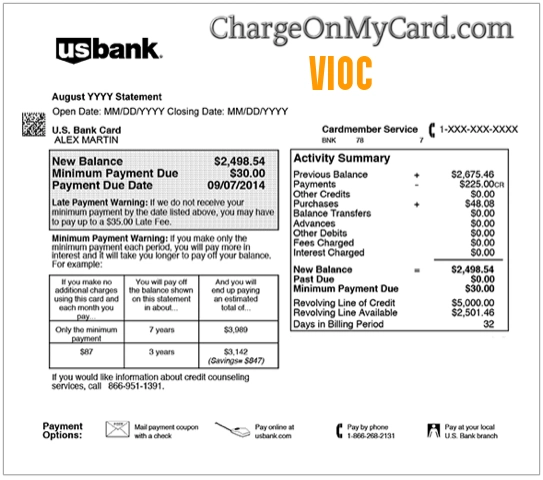
What Is VIOC on My Credit Card?
VIOC on your credit card usually means you paid Valvoline Instant Oil Change for automotive maintenance.
The most common explanation is an oil change, but Valvoline Instant Oil Change also provides other vehicle services.
A VIOC credit card charge may be for:
- A full-service oil change
- Additional quarts of motor oil
- An oil filter
- An engine air filter
- A cabin air filter
- A battery replacement
- A tire rotation
- Transmission-fluid service
- Radiator or coolant service
- Differential-fluid service
- Fuel-system cleaning
- Air-conditioning service
- Headlight or taillight replacement
- Windshield-wiper replacement
- Another maintenance service available at the location
Valvoline’s current service information confirms that VIOC locations offer oil changes along with battery, transmission, radiator, differential, fuel-system, air-conditioning, tire-rotation, filter, lighting, and wiper services.
What Is VIOC on My Bank Statement?
VIOC on a bank statement normally identifies a payment to Valvoline Instant Oil Change.
Your bank may show only the abbreviation rather than the full merchant name.
Depending on the bank and how the payment was made, you might see wording such as:
- VIOC
- VIOC charge
- VIOC VALVOLINE
- VIOC POS
- POS DEBIT VIOC
- PIN POS VIOC
- CHECKCARD VIOC
- VIOC DEBIT
- VIOC followed by letters and numbers
- VIOC followed by a city or state
- PENDING VIOC
- PRE-AUTH VIOC
- VALVOLINE INSTANT OIL CHANGE
The additional letters, numbers, city, or state can help identify the specific Valvoline location.
What Does VIOC Stand For on a Bank Statement?
VIOC stands for Valvoline Instant Oil Change.
Valvoline itself uses the VIOC abbreviation throughout its official website, store information, FAQs, invoice information, and customer communications.
The abbreviation is especially useful on card statements because the complete business name Valvoline Instant Oil Change is much longer.
VIOC should not be confused with a purchase of Valvoline-branded motor oil from Walmart, an auto-parts store, Amazon, or another retailer. In those cases, the retailer would normally be the merchant receiving the payment.
What Does Valvoline Show Up as on a Bank Statement?
A Valvoline Instant Oil Change transaction may appear under several variations, including:
- VIOC
- VIOC VALVOLINE
- VALVOLINE INSTANT OIL CHANGE
- VALVOLINE INSTANT OIL
- POS DEBIT VIOC
- CHECKCARD VIOC
- PIN POS VIOC
- VIOC plus a store identifier
- VIOC plus a city or state
If you remember visiting Valvoline but do not recognize the letters or numbers after VIOC, the transaction can still be legitimate.
Open the expanded transaction details and compare any location information with the Valvoline store you visited.
What Is a VIOC Charge?
A VIOC charge is usually the payment associated with vehicle service at a Valvoline Instant Oil Change center.
The charge is not a separate banking fee simply because the abbreviation VIOC appears.
Most VIOC transactions relate to:
- An oil change
- Preventive maintenance
- Replacement parts offered by the service center
- Fluid services
- Another authorized vehicle-service purchase
The statement descriptor itself usually does not tell you:
- Which vehicle was serviced
- Which services were performed
- Who drove the vehicle
- Which VIOC employee completed the service
- The invoice number
For those details, request the actual VIOC invoice.
What Does POS Debit VIOC Mean?
POS Debit VIOC usually means a debit card was used for a Valvoline Instant Oil Change transaction at a point-of-sale terminal.
Related wording can include:
- POS DEBIT VIOC
- PIN POS VIOC
- CHECKCARD VIOC
- DEBIT VIOC
- VIOC DEBIT
- VIOC POS
The POS or debit wording describes the payment method.
It does not mean you paid a separate VIOC fee.
What Is a VIOC Charge on a Debit Card?
A VIOC charge on a debit card is generally the same type of Valvoline Instant Oil Change transaction as a VIOC credit card charge.
The main difference is that the money is being drawn from the bank account associated with the debit card.
Check:
- The transaction amount
- The service date
- The merchant city or location
- Any VIOC store identifier
- Your Valvoline receipt or invoice
If the debit transaction is unauthorized, contact the bank promptly because debit-card reporting rules and timelines can differ from credit-card disputes.
What Do VIOC GN, VIOC AB, VIOC AN, VIOC AE, or Similar Letters Mean?
Some cardholders search for variations such as:
- VIOC GN charge
- VIOC AB charge
- VIOC AN charge
- VIOC AE charge
- VIOC GQ
- VIOC followed by letters and numbers
These additional characters may be associated with store or location identifiers used within Valvoline’s location system.
For example, Valvoline location information can contain identifiers consisting of letters followed by numbers.
However, the meaning of every abbreviation displayed by every bank is not publicly documented.
If your statement says something such as:
VIOC GN0151
or another VIOC code, use the complete code along with:
- The city
- The state
- The transaction date
- The amount
to identify the likely store.
Do not assume the letters represent a separate company.
What Is CENTRAL VIOC or CENTRAL VIOC POS?
Some cardholders may see wording such as CENTRAL VIOC or CENTRAL VIOC POS in expanded banking searches.
The important merchant clue remains VIOC, which normally refers to Valvoline Instant Oil Change.
“Central” may be additional store, location, transaction, or bank-display information.
If the exact VIOC location is unclear, ask the bank for:
- The full merchant address
- The merchant telephone number
- The complete descriptor
- The merchant category
Then compare that information with the official VIOC store locator.
Why Did VIOC Charge My Card?
You Had an Oil Change
An oil change is the most likely explanation.
Valvoline’s current full-service oil change includes oil, an oil filter, and applicable chassis lubrication, along with an 18-point maintenance check at participating locations.
The final price can depend on:
- The type of oil
- The vehicle
- The number of quarts required
- The store location
- Available discounts or coupons
You Approved Another Valvoline Service
VIOC is not limited to oil changes.
Current VIOC services can include:
- Battery replacement
- Air-filter replacement
- Transmission service
- Radiator service
- Differential-fluid service
- Fuel-system cleaning
- Air-conditioning service
- Tire rotation
- Wiper blades
- Headlight and taillight replacement
Another Household Vehicle Was Serviced
A spouse, partner, child, parent, or another authorized card user may have used the card for a different vehicle.
Ask about every household vehicle rather than checking only the car you normally drive.
A Business or Fleet Vehicle Was Serviced
If this is a business card, the VIOC transaction may relate to:
- A company vehicle
- A service van
- A work truck
- A fleet vehicle
- A rental vehicle
- An employee-authorized maintenance purchase
The Bank Shortened the Merchant Name
You may remember paying “Valvoline” while the bank shows only VIOC.
That is not unusual.
Why Is My VIOC Charge Higher Than Expected?
First request the invoice.
A VIOC transaction may be higher than the oil-change price you remember because of:
- Synthetic or synthetic-blend oil
- Additional quarts of oil
- A specialty filter
- An engine air filter
- A cabin air filter
- A battery
- A tire rotation
- Transmission service
- Radiator service
- Differential-fluid service
- Fuel-system cleaning
- Wiper blades
- Replacement lights
- Taxes
- A coupon or promotion that was not applied
Valvoline says service pricing varies by store location, vehicle, product, number of quarts required, and available offers.
Why Are There Two VIOC Charges?
Two VIOC transactions can result from:
- A pending authorization and the final completed payment
- Two different vehicles being serviced
- Two separate visits
- A failed transaction followed by a successful payment
- A payment adjustment
- A duplicate submission
- An unauthorized transaction
Check the transaction status before assuming both amounts were collected.
If one says pending, it may disappear after the completed charge settles.
What Is a Pending VIOC Charge?
A pending VIOC entry means the transaction has not completely settled.
While pending:
- The amount may change.
- The merchant wording may change.
- The authorization may disappear.
- The final VIOC payment may replace it.
If you recognize the Valvoline service, wait until the transactions finish posting before deciding that you were charged twice.
If you did not authorize the transaction at all, contact your card issuer promptly.
What Is VIOC Alerts?
VIOC Alerts refers to Valvoline Instant Oil Change’s SMS text-message program, not a separate credit-card merchant.
VIOC’s current SMS terms say users may receive automated messages from Valvoline Retail Services and that message and data rates may apply.
Messages can involve:
- Promotions
- Coupons
- Service reminders
- Other VIOC communications
If you see the phrase VIOC Alerts in a text message, that does not by itself mean your card was charged.
For SMS assistance, VIOC currently says users can text HELP to 58720 or contact Customer Care.
What If My Statement Says VIOCH Instead of VIOC?
If you searched for VIOCH, check the actual bank statement carefully.
VIOC is the documented abbreviation for Valvoline Instant Oil Change.
We have not found reliable evidence identifying VIOCH, with an H, as a separate merchant.
VIOCH may be:
- A typing error
- A transcription mistake
- A search variation
- Part of a longer descriptor
If your actual bank statement clearly displays VIOCH, ask the card issuer for the complete merchant name, location, and telephone number before assuming it is Valvoline.
How to Verify a VIOC Charge
Use these steps:
- Open the complete transaction. Look beyond the shortened account overview.
- Record the complete descriptor. Include any letters, numbers, city, state, store number, or phone number.
- Record the amount.
- Check the transaction and posting dates.
- Review every household or business vehicle.
- Ask every authorized cardholder and driver.
- Search email for VIOC, Valvoline, invoice, receipt, or oil change.
- Search text messages for VIOC service or reminder messages.
- Check vehicle records or the glove compartment for a receipt.
- Look for a Valvoline oil-change reminder sticker.
- Use the official VIOC location finder.
- Request the invoice from the servicing store or VIOC.
How Do I Get a VIOC Receipt or Invoice?
Valvoline says customers can request a copy of a VIOC invoice or service history by:
- Contacting the local store
- Using live chat on VIOC.com
- Using VIOC’s online contact process
Valvoline says invoices can be provided by email or mail and that invoice requests may take up to 24 hours to process.
Official invoice help:
Request a VIOC invoice or service history
Useful information to have includes:
- Vehicle year, make, and model
- Approximate service date
- VIOC location
- Transaction amount
- Last four digits of the payment card when requested
- Name, telephone number, or email used during service
Do not post a complete payment-card number, VIN, invoice, home address, password, PIN, CVV, or security code in a public comment.
How Do I Find Which VIOC Location Charged Me?
Start with the expanded transaction details.
Look for:
- A store code
- A city
- A state
- A street address
- A merchant telephone number
Then use the official:
Valvoline Instant Oil Change store locator
If you know the likely location, contact it and ask whether it can locate an invoice matching:
- The service date
- The amount
- The vehicle
- The last four digits of the card when appropriate
If the store cannot locate the transaction, contact VIOC Customer Care.
VIOC Customer Service and Contact Information
Current official Valvoline Instant Oil Change contact information includes:
- VIOC Customer Care: 1-800-327-8242
- Customer Care Hours: Monday-Friday, 8:00 a.m.-9:00 p.m. ET; Saturday, 8:00 a.m.-8:00 p.m. ET, except holidays
- Contact form and live chat: VIOC Contact Us
- Store locator: Find a Valvoline Instant Oil Change
- Invoice help: Request a VIOC invoice
- Vehicle services: VIOC Services
- Location Address: 100 Valvoline Way, Lexington, KY 40509
- Mailing Address: Valvoline, P.O. Box 55270, Lexington, KY 40555
For an invoice or transaction question, the local servicing store is often the best first contact because it has the service record.
What If the VIOC Charge or Service Amount Is Wrong?
If you recognize the Valvoline visit but dispute the amount:
- Request the complete invoice.
- Compare every service and product.
- Check the oil type and number of quarts.
- Look for filters, batteries, fluids, tire rotation, wipers, or other added services.
- Check whether a coupon or promotion was applied.
- Ask the driver what was approved.
- Contact the servicing store.
- Escalate to VIOC Customer Care if necessary.
An incorrect price for an authorized service is different from an unauthorized transaction.
Describe the issue accurately when contacting Valvoline or the bank.
Is a VIOC Charge Fraud?
Not automatically.
VIOC is a legitimate abbreviation for Valvoline Instant Oil Change.
An unfamiliar VIOC charge can still be explained by:
- A forgotten oil change
- Another household vehicle
- A spouse or family member using the card
- A company or fleet vehicle
- A store code you do not recognize
- A pending authorization
However, a legitimate merchant name does not prove that your individual charge was authorized.
Investigate promptly if:
- Nobody recognizes the transaction.
- No vehicle was serviced.
- No VIOC invoice can be located.
- The location is inconsistent with your activity.
- Other unfamiliar transactions have appeared.
What If the VIOC Charge Was Unauthorized?
If no vehicle, driver, invoice, store, or authorized cardholder explains the transaction:
- Contact VIOC or the likely store. Ask whether an invoice can be identified.
- Ask your bank for the complete merchant information.
- Check for other pending VIOC transactions.
- Lock the card if appropriate.
- Report the completed charge to your issuer if it remains unrecognized.
- Ask whether the card should be replaced.
For additional guidance, see our guide to investigating an unrecognized credit-card or bank charge.
Frequently Asked Questions About VIOC Charges
What is VIOC on my credit card?
VIOC on a credit card usually means Valvoline Instant Oil Change. The charge is most likely for an oil change or another vehicle-maintenance service.
What is VIOC on my bank statement?
VIOC on a bank statement usually identifies a Valvoline Instant Oil Change transaction.
What is a VIOC charge?
A VIOC charge is generally a payment made to Valvoline Instant Oil Change for vehicle maintenance.
What does VIOC stand for?
VIOC stands for Valvoline Instant Oil Change.
What does VIOC stand for on a bank statement?
On a bank statement, VIOC normally stands for Valvoline Instant Oil Change and identifies a vehicle-service transaction.
What is a VIOC credit card charge?
A VIOC credit card charge usually represents an oil change, filter, battery, fluid service, tire rotation, or another Valvoline Instant Oil Change service.
What is a VIOC charge on a debit card?
It normally means a debit card was used for a Valvoline Instant Oil Change transaction.
What is POS Debit VIOC?
POS Debit VIOC generally means a debit-card transaction was processed at a Valvoline Instant Oil Change point-of-sale terminal.
What is PIN POS VIOC?
PIN POS VIOC generally means a debit card and PIN were used for a Valvoline Instant Oil Change purchase.
What is CHECKCARD VIOC?
CHECKCARD VIOC is another debit-card descriptor that can identify a Valvoline Instant Oil Change transaction.
What does Valvoline show up as on a bank statement?
Valvoline Instant Oil Change may appear as VIOC, VIOC VALVOLINE, POS DEBIT VIOC, CHECKCARD VIOC, VIOC plus a store code, or the full Valvoline Instant Oil Change name.
What are VIOC GN, VIOC AB, or VIOC AN charges?
The letters may be associated with a VIOC store or location identifier. Check the complete code, city, state, and merchant information to identify the specific Valvoline location.
What is VIOC Alerts?
VIOC Alerts is Valvoline Instant Oil Change’s SMS messaging program. It is separate from a vehicle-service card charge.
Why is my VIOC charge higher than expected?
The amount may include synthetic oil, additional quarts, filters, battery replacement, fluid service, tire rotation, wipers, lights, taxes, or other approved services.
Why are there two VIOC charges?
One may be a pending authorization and the other the completed transaction. Two different vehicle services, payment retries, duplicate transactions, or unauthorized activity are other possibilities.
How do I get a Valvoline VIOC receipt?
Contact the servicing location, use VIOC live chat, or use the official contact process. Valvoline says invoice requests may take up to 24 hours.
What is the VIOC customer service phone number?
Valvoline Instant Oil Change Customer Care is 1-800-327-8242.
Is VIOC fraud?
VIOC itself is a legitimate Valvoline Instant Oil Change descriptor. If no authorized vehicle service explains your individual transaction, contact VIOC and your card issuer promptly.
Is VIOCH the same as VIOC?
VIOC is the documented abbreviation for Valvoline Instant Oil Change. We have not verified VIOCH as a separate merchant; check the complete bank descriptor if your statement actually includes the H.
Related Credit Card and Bank-Statement Resources
- Credit card charge-code directory
- How to investigate an unrecognized credit-card or bank charge
- Valvoline Corporate Office, Complaints, and Reviews
The corporate-office resource is separate from official VIOC Customer Care. For a receipt, charge, store, or service question, start with the servicing location or Valvoline Instant Oil Change Customer Care.
Help Other Cardholders Identify VIOC Charges
If your statement showed VIOC, POS DEBIT VIOC, CHECKCARD VIOC, PIN POS VIOC, VIOC GN, VIOC AB, VIOC AN, VIOC VALVOLINE, or another variation, you can share the non-sensitive details in the comments.
Helpful information includes:
- The exact descriptor
- Approximate amount
- Store city or state
- Type of vehicle service
- Whether the charge was pending or completed
- How Valvoline or the bank identified it
Do not post complete card numbers, bank-account numbers, VINs, license plates, invoices, home addresses, passwords, PINs, CVV codes, or verification codes.
Why Trust ChargeOnMyCard.com?
ChargeOnMyCard.com researches confusing credit-card, debit-card, automotive-service, point-of-sale, store-location, and bank-statement descriptors using current official merchant information, payment clues, transaction variations, and consumer resources.
For this guide, Valvoline Instant Oil Change’s current official website confirms that VIOC provides full-service oil changes along with services including battery replacement, air-filter replacement, transmission service, radiator service, differential-fluid service, fuel-system cleaning, tire rotation, air-conditioning service, lighting, and windshield-wiper replacement.
Valvoline also currently confirms that customers can request VIOC invoices and service history through the servicing store or official customer-support channels and that invoice requests may take up to 24 hours.
Current VIOC Customer Care is 1-800-327-8242, with telephone and live-chat support Monday-Friday from 8:00 a.m.-9:00 p.m. Eastern and Saturday from 8:00 a.m.-8:00 p.m. Eastern, except holidays.
Last reviewed: August 20, 2026
ChargeOnMyCard.com is not affiliated with Valvoline Instant Oil Change, Valvoline Inc., Valvoline Global Operations, any individual VIOC location, payment processor, card network, bank, or financial institution. This article provides general informational guidance and cannot access a VIOC invoice, vehicle-service record, credit card, debit card, or bank account; identify who authorized a private transaction; change a service invoice; issue a refund; block a card; or file a dispute. Verify an individual charge with the servicing Valvoline Instant Oil Change location, VIOC Customer Care, and your financial institution.