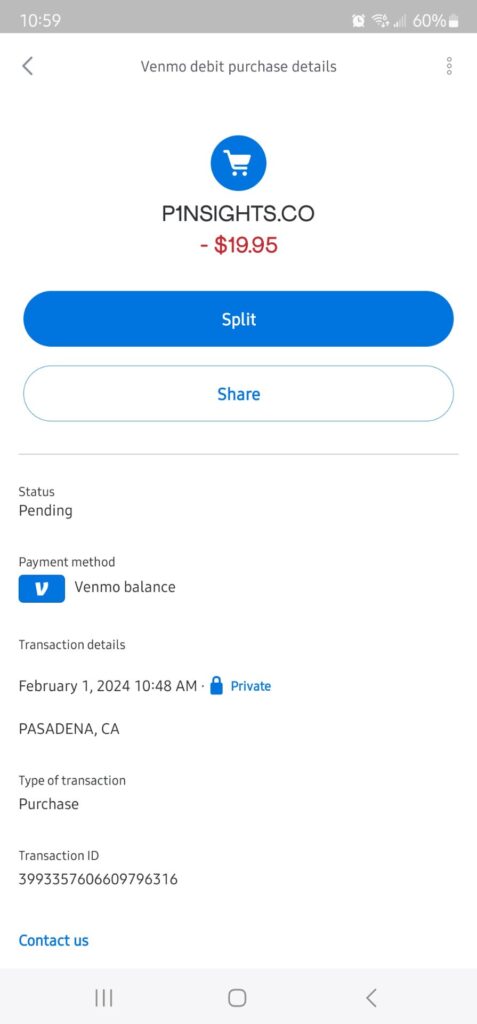
A P1 Fitch charge, P1*FITCHK charge, or P1 Insights charge on your credit card, debit card, or bank statement can be confusing because the descriptor may not clearly identify the merchant. Some cardholders also search for related phone-number-style descriptors such as 8447067699 or 18337823729 after seeing them near a P1-related transaction.
What Is the P1 Fitch or P1*FITCHK Charge?
P1 Fitch, P1*FITCHK, FITCHK, or similar wording may be an abbreviated billing descriptor connected to an online service, membership, subscription, digital product, or merchant billing system. At this time, the exact merchant behind every P1 Fitch-style descriptor may not be obvious from the statement alone.
Some users also search for P1 Insights when trying to identify this type of charge. There is a real business service called P1 Insights, but cardholders should not assume that every P1 Fitch, P1*FITCHK, or phone-number-based descriptor is definitely connected to that company without checking the transaction details.
Why P1 Fitch May Appear on Your Card
- You signed up for an online service, membership, trial, or subscription using your card.
- You purchased access to a digital product, online tool, report, or account-based service.
- A free or low-cost trial converted into a recurring charge.
- A household member, employee, family member, or authorized card user used the card.
- The charge posted under a shortened billing name instead of the product or website name.
- The descriptor included a phone number, such as 8447067699 or 18337823729, instead of a recognizable merchant name.
- Your card information may have been used without permission.
Common P1 Fitch and P1 Insights Descriptor Variations
Cardholders may see variations such as:
- P1 Fitch
- P1*FITCHK
- P1 FITCHK
- FITCHK
- P1 Insights
- P1 Insights charge
- 8447067699
- 18337823729
The exact spelling may vary by bank, card issuer, payment processor, or merchant account.
Why This Charge Can Be Hard to Identify
This charge can be difficult to identify because it may use an abbreviated descriptor, a phone number, or a parent-company name instead of the product or website you remember. Some banks show only a short text label until the charge fully posts.
If the transaction is still pending, wait for it to post before making a final decision. Once posted, your bank or card issuer may show additional merchant details, such as a phone number, merchant category, location, or full billing name.
How to Verify a P1 Fitch Charge
- Check whether the charge is pending or posted.
- Look for the full descriptor in your online banking app, not just the short statement line.
- Search your email for P1, Fitch, FITCHK, P1 Insights, receipt, trial, membership, subscription, cancellation, or the exact dollar amount.
- Ask household members or authorized card users whether they signed up for an online service or trial.
- Check recent browser history, app subscriptions, and saved-card accounts.
- If a phone number appears in the descriptor, verify it carefully before calling or sharing information.
- Contact your bank or card issuer if you cannot identify the merchant.
Be Careful With Phone Numbers in the Descriptor
Some cardholders search for phone numbers such as 8447067699 or 18337823729 after seeing them connected to a P1-style charge. A phone number in a card descriptor may be a merchant support number, billing support line, or payment processor contact, but it should still be handled carefully.
Do not provide your full card number, online banking password, PIN, Social Security number, or one-time security code to anyone who contacts you unexpectedly. If you are unsure whether a support number is legitimate, call the number on the back of your card and ask your issuer for the full merchant details.
What To Do If You Recognize the Charge
If the charge matches a service, membership, trial, or online product you recognize, save the receipt, login information, cancellation confirmation, and any support messages. If it is a recurring charge you no longer want, cancel through the original website or service and keep written proof of cancellation.
If you believe you canceled but were still charged, gather your cancellation confirmation, charge date, amount, and account email before contacting support or your card issuer.
What To Do If You Do Not Recognize the Charge
- Check all email accounts for receipts or trial signup confirmations.
- Ask authorized users whether they used the card for an online service.
- Contact your bank or card issuer and request the full merchant details.
- Ask whether the charge is coded as recurring, online, card-not-present, or subscription-related.
- If you cannot identify the merchant, ask your issuer about blocking future charges from the same merchant.
- For suspected fraud, ask whether to lock the card, replace the card number, and file a dispute.
Could the P1 Fitch Charge Be Fraud?
A P1 Fitch, P1*FITCHK, or P1 Insights charge is not automatically fraud. It may be connected to an online membership, trial, subscription, or service that someone authorized. However, if you did not sign up, no authorized card user recognizes it, and the merchant cannot be identified, treat it as potentially unauthorized.
Use your bank’s official app or the phone number on the back of your card. Avoid clicking suspicious refund, cancellation, or support links in emails or text messages that claim to help with an unknown P1 charge.
Related Subscription, Online Service, and Billing Descriptor Guides
- CRSCR Charge on Credit Card
- ProBiller Charge on Credit Card
- Cleeng LLC Charge on Credit Card
- Luzern Solutions LLC Charge on Credit Card
- Klarna charge on a credit card or bank statement
Help Other Cardholders Identify This Charge
If you saw a P1 Fitch, P1*FITCHK, FITCHK, P1 Insights, 8447067699, or 18337823729 charge on your credit card, debit card, or bank statement, please share your experience in the comments. Helpful details include the exact descriptor, amount, whether it was recurring, whether you found the original merchant, and how the issue was resolved. Do not post full card numbers, passwords, PINs, security codes, Social Security numbers, or personal contact information.
Why Rely on ChargeOnMyCard.com?
ChargeOnMyCard.com helps consumers identify confusing credit card, debit card, and bank statement charges by researching merchant descriptors, phone-number-style billing names, online subscription patterns, and official support options when available. Our goal is to help cardholders determine whether a charge is likely legitimate, mistaken, recurring, or potentially unauthorized.
Disclaimer
ChargeOnMyCard.com is not affiliated with P1 Fitch, P1*FITCHK, P1 Insights, Prolific 1, any payment processor, bank, or card issuer. This page is for informational purposes only and should not be treated as financial, legal, subscription, or banking advice. If you believe a charge is unauthorized, contact your bank or credit card issuer directly.