
If you see an ISPA PIMDS charge, ISPA/PIMDS, ISPA/PIMDS PAI ISO, or ISPA/PIMDS WITHDRWL PAI ISO on your bank statement, it is usually connected to an ATM withdrawal, ATM network transaction, ATM operator fee, or cash withdrawal processed through an independent ATM provider. If you do not recognize the withdrawal, contact your bank or credit union immediately because ATM and debit transactions should be handled quickly.
Consumer Reports and Experiences
Consumers often search for ISPA PIMDS, ISPA/PIMDS, ISPA/PIMDS charge, ISPA/PIMDS on bank statement, ISPA/PIMDS PAI ISO, ISPA/PIMDS WITHDRWL PAI ISO, PAI ISO ATM charge, and what is ISPA/PIMDS on my bank statement after seeing a withdrawal or fee they do not immediately recognize.
Many cardholders later connect the descriptor to an ATM cash withdrawal at a convenience store, gas station, bar, dispensary, hotel, small retail shop, travel stop, private ATM, or other non-bank ATM location. Others report concern because the statement may show ISPA/PIMDS or PAI ISO instead of the store name, ATM location, or cash amount they remember withdrawing.
If the charge matches a cash withdrawal you made, it may be legitimate. If you did not use an ATM, if the amount is unfamiliar, or if you see multiple ATM withdrawals you did not authorize, treat it as urgent and contact your bank or card issuer right away.
What Is the ISPA/PIMDS Charge?
The ISPA/PIMDS charge appears to be an ATM-related descriptor. It is often associated with an ATM cash withdrawal, ATM surcharge, ATM operator fee, or transaction processed through an independent ATM network or operator.
When PAI ISO appears with the descriptor, it may point to an ATM operated, serviced, or processed through PAI-related ATM systems. PAI provides ATM services and transaction-processing support for financial institutions, retailers, independent operators, and other ATM market partners.
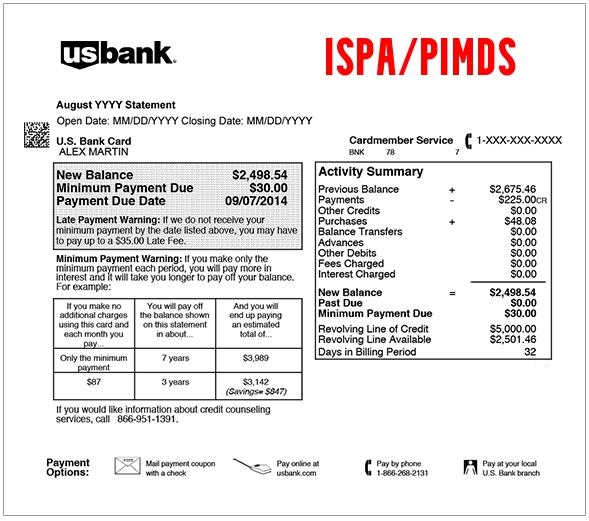
Why ISPA/PIMDS May Appear on Your Statement
- ATM cash withdrawal: You may have withdrawn cash from a non-bank ATM.
- ATM surcharge: A fee may have been charged by the ATM operator.
- Independent ATM operator: The ATM may be managed by a third-party ATM company rather than your bank.
- PAI ISO network transaction: The descriptor may include PAI ISO when the ATM or transaction processing is connected to PAI-related systems.
- Convenience store or gas station ATM: Smaller retailers often host privately operated ATMs that show network-style descriptors.
- Bar, club, hotel, or event ATM: Temporary or private ATMs may show an operator code instead of the venue name.
- Withdrawal plus fee: The total may include both the amount of cash withdrawn and a surcharge, or the fee may appear as a separate line.
- Debit card skimming or fraud: If you did not use the ATM, your card or PIN may have been compromised.
Common ISPA/PIMDS Statement Variations
The exact wording can vary by bank, ATM operator, location, network, and whether the line item is the withdrawal or a fee. Possible statement variations include:
- ISPA/PIMDS
- ISPA PIMDS
- ISPA/PIMDS CHARGE
- ISPA/PIMDS ON BANK STATEMENT
- ISPA/PIMDS PAI ISO
- ISPA/PIMDS WITHDRWL PAI ISO
- ISPA/PIMDS WITHDRAWAL PAI ISO
- ISPA/PIMDS ATM
- ISPA/PIMDS ATM CASH WITHDRAWAL
- PAI ISO
- PAI ISO ATM
- PAI ISO WITHDRAWAL
- ATM CASH WITHDRAWAL FEE
- ATM WITHDRWL
- ATM SURCHARGE
Is ISPA/PIMDS the Same as PAI ISO?
Not exactly. ISPA/PIMDS appears to be the statement-code wording, while PAI ISO may identify the ATM operator, network, processor, or independent sales organization relationship connected to the ATM transaction.
If your statement says ISPA/PIMDS PAI ISO, start by checking whether you withdrew cash from an independent ATM near the date and location shown on your bank statement. If you did not, contact your bank immediately.
Why the Location May Look Wrong
ATM descriptors do not always show the exact business name where the machine was located. A statement may show the ATM operator, network, processing company, city, terminal ID, or a shortened location instead of the convenience store, bar, hotel, or retail location you remember.
For example, a cash withdrawal made at a small store may show an ATM network or processor descriptor rather than the store’s name. Ask your bank for the ATM terminal ID, address, trace number, and merchant details if the location is unclear.
How To Identify an ISPA/PIMDS ATM Charge
Before disputing the transaction, try to match the charge to a real ATM withdrawal.
- Check the date and time: Compare the transaction to when you may have withdrawn cash.
- Check the amount: Add the cash withdrawn plus any ATM surcharge or bank fee.
- Look for two lines: Some statements show the withdrawal and surcharge separately.
- Check the location: Look for the city, state, ATM terminal ID, or nearby business name.
- Review your cash use: Think about restaurants, bars, events, travel, parking, tips, or cash-only businesses visited that day.
- Ask other card users: A spouse, family member, employee, or authorized user may have used the card.
- Check your wallet: Confirm whether the physical debit card is still in your possession.
- Ask your bank for details: Request the full ATM location, terminal ID, trace number, transaction type, and whether a PIN was used.
PAI Contact Information
If your bank’s merchant record specifically points to PAI or PAI ISO, you can use PAI’s official contact information. However, for consumers, your bank or credit union should usually be the first call because the bank controls your debit card, account dispute, and ATM transaction record.
- PAI website: gopai.com
- PAI locations and contact page: PAI Contact / Locations
- PAI existing customer support: 1-877-271-2627
- PAI support email: customersupport@gopai.com
- PAI corporate headquarters: 13551 Triton Park Boulevard, Suite 1000, Louisville, KY 40223
Your Bank Should Be the First Contact
If you do not recognize the ISPA/PIMDS withdrawal, contact the bank or credit union that issued your debit card. The bank can see transaction details that may not appear on your online statement.
Ask your bank for:
- The ATM terminal ID
- The exact ATM address
- The date and time of the withdrawal
- Whether the card chip, magnetic stripe, contactless tap, or card number was used
- Whether the PIN was entered
- The ATM operator or processor name
- The trace number or reference number
- Any surcharge or separate ATM fee
What To Do If the ATM Withdrawal Was Legitimate
If the charge matches a cash withdrawal you made, save the details for future reference.
- Match the statement amount to the cash withdrawn and any ATM fee.
- Write down the ATM location in case you see the descriptor again.
- Check whether your bank also charged an out-of-network ATM fee.
- Use in-network ATMs when possible to avoid extra fees.
- Monitor future statements so you can quickly spot unfamiliar ATM activity.
What To Do If You Do Not Recognize the Charge
If you did not use an ATM, did not authorize the withdrawal, or see multiple ATM withdrawals, contact your bank immediately.
- Call the number on the back of your debit card or your bank’s official website.
- Tell the bank you may have an unauthorized ATM withdrawal.
- Ask the bank to start a dispute or error-resolution investigation.
- Ask whether your card should be canceled and replaced.
- Change your PIN if the bank believes the PIN may be compromised.
- Ask whether additional linked accounts are at risk.
- Ask for written confirmation of your dispute or claim number.
- Continue monitoring your account for more ATM or debit transactions.
ATM Skimming and PIN Theft Warning
Unrecognized ISPA/PIMDS ATM withdrawals may be a sign of card skimming, PIN theft, lost-card misuse, or debit card fraud. Skimmers can be placed on ATMs, gas pumps, point-of-sale terminals, and other card readers.
To reduce risk, inspect ATMs before using them, avoid machines that look loose or damaged, cover the keypad when entering your PIN, use well-lit indoor ATMs when possible, and monitor bank alerts closely. If an ATM keeps your card, contact your bank immediately.
Credit Card vs. Debit Card vs. Bank Account
Most ISPA/PIMDS reports are best understood as ATM or debit-card activity, not a normal online credit card purchase. However, consumers may still search for this as a credit card charge because statement wording can be confusing.
- Debit card: An ATM withdrawal may remove funds from your checking account immediately.
- Bank account: The transaction may appear as a cash withdrawal or ATM fee.
- Credit card: If a credit card was used at an ATM, it may be treated as a cash advance with fees and interest.
If you are unsure which account was affected, check whether the line appears on a checking account, debit card activity, or credit card statement.
What If the Amount Includes an ATM Fee?
ATM transactions may involve several possible charges:
- The cash withdrawal amount
- The ATM operator surcharge
- Your bank’s out-of-network ATM fee
- A foreign transaction or international ATM fee, if applicable
- A cash advance fee, if a credit card was used
Because of this, a $60 cash withdrawal may not always show as exactly $60 on your final statement. Look for separate fee lines and ask your bank to explain each amount.
Is ISPA/PIMDS a Scam?
The ISPA/PIMDS descriptor itself is not automatically a scam. It may be a legitimate ATM withdrawal or ATM fee if it matches a cash withdrawal you made.
However, if you did not use the ATM, if the card was in your possession, if you see multiple withdrawals, or if the location is unfamiliar, treat it as possible debit card fraud or ATM skimming. Contact your bank immediately and ask about your rights for unauthorized electronic fund transfers.
Frequently Asked Questions
What is ISPA/PIMDS on my bank statement?
ISPA/PIMDS on a bank statement is usually connected to an ATM cash withdrawal, ATM operator fee, or ATM network transaction. It may appear with PAI ISO when the transaction is connected to a PAI-related ATM network or operator.
What is ISPA/PIMDS PAI ISO?
ISPA/PIMDS PAI ISO most likely points to an ATM transaction involving PAI-related ATM services, an independent ATM operator, or an ATM processing relationship. Check whether you withdrew cash from a non-bank ATM.
What does ISPA/PIMDS WITHDRWL PAI ISO mean?
It likely means an ATM withdrawal was processed through an ATM operator or network connected to PAI ISO. “WITHDRWL” is a shortened version of withdrawal.
Why does the charge not show the store name?
Independent ATMs may show the ATM operator, processor, terminal ID, or network descriptor instead of the store, gas station, hotel, bar, or retail location where the ATM was placed.
Can ISPA/PIMDS be an unauthorized ATM withdrawal?
Yes. If you did not use the ATM or authorize the withdrawal, contact your bank or credit union immediately and ask about an unauthorized ATM/debit transaction dispute.
Should I contact PAI or my bank first?
Contact your bank first if money was taken from your account. Your bank can provide the ATM details, start a dispute, cancel your card, change your PIN, and explain your rights.
Can I get my money back?
If the transaction was unauthorized, your bank must follow error-resolution rules for electronic fund transfers. Timing matters, so report the issue as soon as possible and keep your claim number.
How do I avoid this type of charge?
Use in-network bank ATMs when possible, inspect ATMs before use, cover your PIN, avoid suspicious card readers, turn on transaction alerts, and review statements frequently.
Related Credit Card and Bank Charges
ATM, automated-terminal, vending, laundry, and card-reader descriptors can be confusing because statements may show a network name, processor, terminal operator, phone number, or location code instead of the business name you recognize.
- CSC ServiceWorks Charge
- Cantaloupe Vending Charge
- Nayax Vending LLC Charge
- Cantaloupe Charge
- Snack Soda Vending Charge
- CARDMEMBER SERV WEB PYMT Charge
- HARRIS NA HELP ALS Charge
- CDSR Charge: ATM Withdrawal and Balance Inquiry Code
Why Trust ChargeOnMyCard.com?
ChargeOnMyCard.com helps consumers research confusing credit card, debit card, ATM, ACH, automated-terminal, payment-processor, and bank-statement descriptors using available company information, official resources, payment clues, and reports from cardholders. Our goal is to help readers understand what a charge or withdrawal may be, how to verify it, and when to contact the merchant, ATM operator, bank, or card issuer.
Share Your Experience
Have you seen an ISPA/PIMDS, ISPA/PIMDS PAI ISO, ISPA/PIMDS WITHDRWL PAI ISO, PAI ISO, or ATM withdrawal descriptor on your bank statement? Please share the exact descriptor, amount, city/state, whether it matched an ATM withdrawal, and how you resolved it. Your report may help another reader identify a legitimate ATM withdrawal, ATM surcharge, duplicate fee, suspicious ATM, or unauthorized transaction.
Disclaimer
ChargeOnMyCard.com is an independent consumer information website and is not affiliated with PAI, Brink’s, ISPA/PIMDS, any ATM operator, any bank, any credit union, any payment network, or any company mentioned. Information is provided for educational purposes only and is not financial, legal, or banking advice. Always verify unfamiliar charges or withdrawals directly with your bank, credit union, card issuer, or the merchant shown on your transaction record before taking action.