A Stripe charge, STRIPE.COM charge, or 510 Townsend Street charge on a credit card, debit card, or bank statement usually relates to a business that uses Stripe to process payments.
Stripe provides payment infrastructure to online stores, subscription services, apps, software companies, charities, event organizers, professional service providers, and many other businesses. Stripe may have processed the payment without being the company that sold the product or service. Use Stripe’s secure charge lookup and your transaction details to identify the underlying merchant before requesting a cancellation, refund, or dispute.
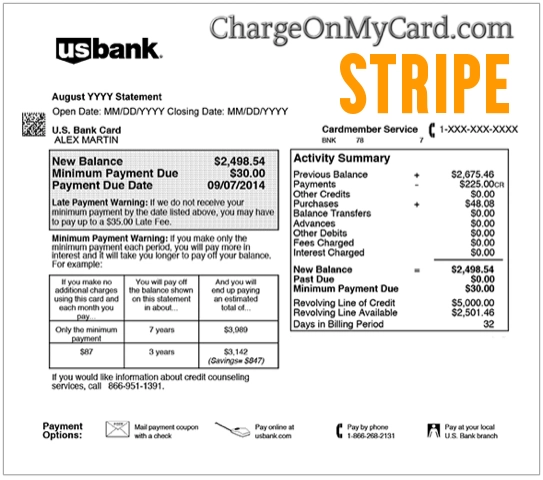
What Is the Stripe Charge on Your Card?
A Stripe-related payment generally means that a business used Stripe to accept and process your card or bank payment.
The transaction may represent:
- An online retail purchase
- A recurring subscription
- A software or app payment
- An online course or membership
- A ticket or event registration
- A donation or crowdfunding contribution
- A professional-service invoice
- A restaurant, delivery, or local-business purchase
- A deposit or installment payment
- A payment made through a platform that uses Stripe
- A purchase by another authorized card user
- An unauthorized use of the payment method
The statement may not clearly identify the product, subscription, website, seller, account email, or person who completed the transaction.
Is Stripe the Company That Sold Me Something?
Usually not.
Stripe is a payment processor and financial-services platform. Businesses use Stripe to:
- Accept credit and debit cards
- Collect recurring subscription payments
- Process bank-account payments
- Send invoices and payment links
- Accept digital-wallet payments
- Operate marketplaces and platforms
- Collect donations or event payments
The business using Stripe remains responsible for the order, product, service, subscription, cancellation, delivery, and refund.
Stripe normally cannot:
- Cancel a merchant’s subscription for you
- Change or cancel an order
- Issue a refund on behalf of the seller
- Provide product support
- Explain delivery or service problems
What Is the 510 Townsend Street Charge?
510 Townsend Street in San Francisco was a former Stripe business address. Some older or address-based banking descriptions may therefore be connected with a payment processed through Stripe.
Possible variations include:
- 510 TOWNSEND ST
- 510 TOWNSEND STREET
- 510 TOWNSEND SAN FRANCISCO
- 510 TOWNSEND ST SAN FRANCISCO CA
- STRIPE 510 TOWNSEND
- 510 TOWNSEND STRIPE
- POS 510 TOWNSEND ST
- CHECKCARD 510 TOWNSEND
Stripe has since listed 354 Oyster Point Boulevard in South San Francisco as a current address. An older 510 Townsend entry should still be treated as a possible Stripe-processing clue rather than the name of the actual seller.
Common Stripe Statement Variations
The exact description depends on the seller, card network, bank, payment type, and transaction status.
- STRIPE
- STRIPE.COM
- STRIPE PAYMENT
- STRIPE PAYMENTS
- STRIPE *MERCHANT NAME
- STRIPE*MERCHANT
- STRIPE 510 TOWNSEND
- 510 TOWNSEND ST
- PENDING STRIPE
- CHECKCARD STRIPE
- CHKCARD STRIPE
- POS DEBIT STRIPE
- RECURRING PAYMENT STRIPE
- ACH STRIPE
- ACCTVERIFY
The seller’s name may appear after an asterisk or as a shortened suffix. Banks can also truncate punctuation, telephone numbers, website names, and location information.
Why Does Stripe Appear Instead of the Business Name?
Businesses using Stripe choose a statement descriptor intended to help customers identify their payments.
Stripe may appear instead of the expected seller because:
- The merchant configured an unclear statement descriptor.
- The bank shortened or reformatted the merchant name.
- The payment is still pending.
- The seller operates under a different legal or billing name.
- The payment came through a platform or marketplace.
- The business changed its public name after creating its Stripe account.
- An older Stripe address or processor record was displayed.
American Express cardholders may temporarily see Stripe rather than the full merchant name while a transaction is pending. The description may update after the payment posts.
How to Use Stripe’s Charge Lookup
Stripe provides a secure charge-lookup tool for consumers who see an unfamiliar Stripe-related payment.
- Open the official Stripe charge-lookup page.
- Follow the secure prompts.
- Enter the requested transaction information.
- Use the result to identify the business that created the charge.
- Compare the merchant with your email receipts and accounts.
- Contact that business regarding the order, subscription, cancellation, or refund.
Use Stripe’s secure charge lookup
Only enter payment details on Stripe’s official secure website. Do not post transaction details, card digits, or lookup results in public comments.
What If Stripe’s Lookup Does Not Identify the Charge?
When the lookup result is incomplete or unavailable:
- Confirm that the charge has finished posting.
- Copy the entire statement descriptor.
- Search email for the exact amount and transaction date.
- Check spam, promotions, and archived email folders.
- Ask household members and authorized card users.
- Review subscriptions and recent online purchases.
- Ask the bank for the full merchant name, telephone number, merchant category, and location.
- Contact the seller if the bank identifies one.
- Report the payment to the issuer if no authorized merchant can be found.
Search Your Email and Accounts for the Purchase
Useful searches include:
- Stripe
- Payment receipt
- Invoice paid
- Subscription confirmation
- Membership renewal
- Order confirmation
- Donation receipt
- Event registration
- The exact charged amount
- The transaction date
- The merchant name shown after STRIPE
Also review:
- Browser purchase history
- App subscriptions
- Online course accounts
- Software and cloud subscriptions
- Event-ticket accounts
- Charitable-donation records
- Family or business-card usage
Is a Stripe Charge a Subscription?
It can be, but Stripe itself is normally not the subscription provider.
A business may use Stripe to collect:
- Monthly memberships
- Annual software subscriptions
- Online-course payments
- News or media subscriptions
- Professional-service retainers
- Recurring donations
- Installment plans
- Free trials that convert to paid billing
Check the frequency and amount of the payments. Repeated charges on approximately the same date may indicate recurring billing.
How to Cancel a Subscription Processed by Stripe
Stripe cannot ordinarily cancel the subscription on behalf of the business.
- Use Stripe’s charge lookup to identify the seller.
- Search for the seller’s receipt or welcome email.
- Sign in to the seller’s website or app.
- Open Billing, Subscription, Membership, or Account settings.
- Complete the merchant’s cancellation process.
- Save the cancellation screen and confirmation email.
- Verify that another renewal date is no longer displayed.
- Monitor the next statement.
If the seller cannot be located online, ask the bank for the merchant’s contact details.
How to Request a Refund for a Stripe-Processed Purchase
Refunds must normally be requested from the business that accepted the payment.
- Identify the business through Stripe’s lookup.
- Locate the order, invoice, or subscription.
- Review the business’s refund policy.
- Contact the business directly.
- Provide the transaction date, amount, and order information.
- Ask for written confirmation of its decision.
- Save all emails and support messages.
- Monitor the original payment method for an approved refund.
Suggested message:
I am contacting you about a payment processed through Stripe on [date] for [amount]. Please identify the product, service, subscription, account email, and billing authorization connected with the transaction. I am requesting [cancellation, refund, duplicate-payment review, or unauthorized-payment review]. Please confirm your response in writing.
Do not email a complete card number, CVV, PIN, password, or authentication code.
How Long Does a Stripe Refund Take?
The seller initiates the refund through Stripe, but the cardholder’s bank controls when the credit becomes visible.
A refund may:
- Appear as a separate credit
- Reverse the original pending payment
- Cause the original charge to disappear
- Take several business days to display
- Take longer depending on the bank and payment method
Contact the merchant first when an approved refund has not appeared. Contact the bank with the refund confirmation if the merchant says the refund was completed.
What Is a Pending Stripe Charge?
A pending Stripe entry is an authorization that has not yet completed.
It may:
- Post under a more detailed merchant name
- Change from Stripe to the seller’s descriptor
- Update to the final purchase amount
- Disappear if the payment is canceled or reversed
- Remain temporarily beside the completed transaction
Wait for the transaction to post when there is no immediate fraud concern. Contact the bank promptly when the payment is completely unfamiliar or additional suspicious transactions appear.
What Is a $1 Stripe Charge?
A small $1 pending charge may be a temporary card authorization used to verify payment details.
This can happen when:
- A business saves a new card
- A card is added to an account
- A subscription payment method is updated
- A platform verifies that the card is valid
The $1 authorization should normally disappear rather than become a completed purchase.
Contact the bank when:
- The $1 entry posts as a completed charge.
- You did not add or update a card.
- Several small charges appear.
- A larger unauthorized transaction follows.
What Is ACCTVERIFY or a Stripe Microdeposit?
`ACCTVERIFY` may appear when a business using Stripe verifies a bank account for ACH payments.
Stripe may send:
- Two small microdeposit amounts
- A single deposit containing a verification code
These deposits are used to confirm control of the bank account and may take one or two business days to appear.
Do not enter a verification amount or code unless you initiated the account connection with a business you recognize.
Why Are There Multiple Stripe Charges?
Several Stripe entries may represent:
- Several separate purchases
- A purchase and a recurring subscription
- Two accounts using the same payment card
- A pending authorization and completed payment
- A failed payment followed by a successful attempt
- A deposit followed by the remaining balance
- Separate merchants that both use Stripe
- A temporary $1 card authorization
- An actual duplicate completed payment
- Repeated unauthorized activity
Do not assume that two Stripe entries came from the same seller. Identify each transaction separately.
What If the Merchant Name Is Different From the Website?
The descriptor may show:
- The business’s legal name
- A parent company
- A payment or billing name
- A shortened website name
- A platform operating the checkout
- A franchise or local location
- A product name rather than the company name
Compare the amount, date, receipt, website, and account before deciding that the transaction is unrelated.
What If You Never Made the Purchase?
- Save the complete descriptor, amount, and date.
- Determine whether the payment is pending or completed.
- Use Stripe’s secure charge lookup.
- Ask all authorized card users.
- Search every personal and business email account.
- Contact the identified merchant.
- Ask the merchant to cancel any unauthorized subscription.
- Lock the card if further suspicious payments appear.
- Notify the financial institution promptly.
- Ask whether the card number or payment token should be replaced.
A genuine Stripe transaction does not prove that the cardholder authorized the underlying merchant purchase.
Credit Card Dispute Guidance
Contact the credit-card issuer promptly when:
- No authorized merchant can be identified
- The card was used without permission
- The merchant refuses to address an actual duplicate payment
- Billing continued after confirmed cancellation
- The amount differs from the receipt or agreement
- The merchant cannot locate the payment
- An approved refund does not appear
Keep:
- The complete descriptor
- The Stripe lookup result
- Order and subscription records
- Cancellation confirmation
- Merchant emails
- Refund confirmation
- Bank messages
Official consumer guidance:
CFPB credit-card dispute guidance
Debit Card and Bank Account Guidance
Report an unauthorized debit-card or bank payment promptly.
Ask the financial institution:
- Whether the entry is pending or completed
- Whether another authorization is pending
- Whether the payment is marked as recurring
- Whether a saved card or digital-wallet token was used
- Whether the bank can provide the underlying merchant details
- Whether future payments can be blocked
- Whether the card or account number should be replaced
Official consumer guidance:
CFPB unauthorized debit and bank-transaction guidance
Credit-card and debit-card protections, reporting periods, and dispute procedures differ.
Current Stripe Contact Information
- Current mailing address: Stripe Payments Company, 354 Oyster Point Boulevard, South San Francisco, CA 94080
- Former address: 510 Townsend Street, San Francisco, CA 94103
- Website: Stripe
- Secure charge lookup: Identify a Stripe-processed charge
- Consumer charge help: Stripe charge-identification guidance
- Official contact page: Contact Stripe
Stripe does not publish a general consumer telephone number for identifying ordinary purchases processed for other businesses. Avoid unverified Stripe support numbers found in advertisements, comments, or unofficial search listings.
Consumer Reports and Experiences
There are currently zero visible public reviews on this ChargeOnMyCard.com page.
ChargeOnMyCard.com has not received visible cardholder confirmation establishing:
- Which businesses created the Stripe payments
- Whether any payment was a subscription
- Whether a 510 Townsend descriptor identified Stripe processing
- Whether a merchant issued a cancellation or refund
- Whether any transaction was unauthorized
- How a financial institution resolved a dispute
ChargeOnMyCard.com cannot:
- Access Stripe payment records
- Identify a merchant from a card number
- Cancel a merchant subscription
- Change or cancel an order
- Issue a refund
- Replace a payment card
- Submit a bank dispute
Frequently Asked Questions About Stripe Charges
What is Stripe on my credit card?
It generally means a business used Stripe to process your payment. Stripe may not be the company that sold the product or service.
What is 510 Townsend Street on my bank statement?
510 Townsend Street was a former Stripe business address. The entry may relate to a business using Stripe, but the underlying seller still needs to be identified.
How do I find out who charged me through Stripe?
Use Stripe’s official secure charge-lookup tool, then compare the result with your receipts and accounts.
Can Stripe cancel my subscription?
No. Contact the business that created the subscription. Stripe processes the payment but normally cannot cancel it for the customer.
Can Stripe issue my refund?
Not on behalf of the seller. The business that accepted the payment must generally approve and initiate the refund.
Why does my American Express card temporarily say Stripe?
American Express may display Stripe instead of the seller’s name for approximately 48 hours while the transaction is pending.
What is a $1 Stripe charge?
It may be a temporary authorization used while storing or verifying a card. It should normally disappear rather than post as a purchase.
What is ACCTVERIFY?
It may be an ACH bank-account verification microdeposit initiated through Stripe or another ACH provider.
Why are there two Stripe charges?
They may be separate merchants, a pending and completed payment, two purchases, a subscription and order, or a true duplicate. Investigate each entry separately.
What if Stripe’s lookup finds nothing?
Wait for a pending payment to post, search email and account records, and ask the bank for the complete merchant information.
Can ChargeOnMyCard.com identify the seller?
No. ChargeOnMyCard.com cannot access Stripe, merchant, card, refund, subscription, or banking records.
Related Payment Processor and Charge Guides
- PayPal 402-935-7733 Charge: Find the Merchant or Subscription
- How to Investigate an Unrecognized Credit Card, Debit Card, or Bank Charge
PayPal is a separate payment company and is not affiliated with Stripe. Both descriptors can require identifying the underlying seller rather than contacting the processor about the product itself.
Help Other Cardholders Identify Stripe Charges
If you saw STRIPE, STRIPE.COM, 510 TOWNSEND ST, or another Stripe-related variation, please share what business the payment represented.
Helpful nonprivate details include:
- The descriptor without private transaction references
- The general amount
- The type of product, service, donation, or subscription
- Whether Stripe’s lookup identified the seller
- Whether the payment was pending or completed
- Whether a cancellation was confirmed
- Whether the merchant issued a refund
- How the issuer resolved an unauthorized payment
Do not post card numbers, card digits, Stripe lookup information, account emails, invoice numbers, billing addresses, passwords, PINs, CVV codes, or authentication codes.
Why Rely on ChargeOnMyCard.com?
ChargeOnMyCard.com researches confusing credit-card, debit-card, payment-processor, subscription, authorization, bank-verification, refund, and bank-statement descriptors using current merchant resources, official payment guidance, consumer-protection information, statement patterns, and visible cardholder reports.
We distinguish Stripe, the payment processor, from the separate business that sold the product or service. Readers should identify the actual merchant, account, purchase, subscription, pending authorization, duplicate transaction, or unauthorized person connected with a specific payment.
Last reviewed: July 2026.
Disclaimer
ChargeOnMyCard.com is not affiliated with Stripe, Stripe Inc., Stripe Payments Company, Link, any Stripe user, seller, platform, subscriber, cardholder, bank, credit union, card network, payment processor, or financial institution. This article is provided for informational purposes only and is not financial, legal, payment-processing, subscription, refund, dispute, account-security, or fraud-prevention advice. Contact the underlying merchant and financial institution directly regarding a specific transaction.