
If you see a WWW HOVER COM charge on your credit card, debit card, PayPal account, Apple Pay, or bank statement, it may be connected to Hover.com, a domain registration and custom email service provided by Tucows. The charge may appear after buying a domain name, renewing a domain, transferring a domain, paying for Hover email, or updating a saved payment method for automatic renewal.
A WWW HOVER COM charge is not automatically fraud. It may be a legitimate domain registration, domain renewal, email subscription, PayPal payment, Apple Pay transaction, account balance payment, or purchase made by another authorized card user. However, if you do not recognize the domain, account, email service, or renewal, verify it quickly and contact your bank or card issuer if the charge is unauthorized.
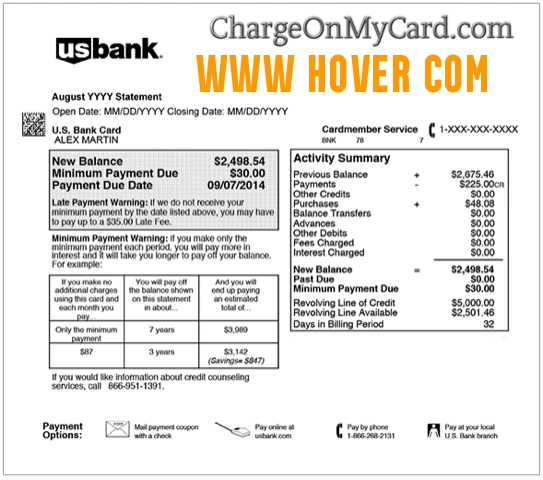
WWW HOVER COM Charge on Credit Card: What It May Mean
WWW HOVER COM appears to be a billing descriptor for Hover.com. Hover is commonly used for domain names, domain transfers, domain renewals, DNS management, and custom email addresses. Because Hover services can renew automatically, a charge may appear months or a year after the original purchase.
The charge may not show the exact domain name or email address on your bank statement. Instead, your card issuer may show a shortened descriptor such as WWW HOVER COM, HOVER.COM, HOVER, or a Tucows-related billing label.
If you own a domain name, manage a website, operate a small business, use custom email, or pay for a domain on behalf of a company or family member, the charge may be legitimate. If none of that sounds familiar, check your Hover account, email receipts, PayPal or Apple Pay activity, and authorized card users before disputing the charge.
Common Hover Statement Descriptor Variations
Card and bank statements may shorten merchant names, remove punctuation, or show different labels for debit, credit, PayPal, Apple Pay, pending, and refund transactions. Possible variations include:
- WWW HOVER COM
- HOVER.COM
- HOVER COM
- HOVER
- HOVER CHARGE
- HOVER CHARGE ON CREDIT CARD
- HOVER CHARGE ON DEBIT CARD
- HOVER DOMAIN RENEWAL
- HOVER EMAIL
- TUCOWS HOVER
- TUCOWS DOMAINS
- PAYPAL *HOVER
- APPLE PAY HOVER
- CHKCARD WWW HOVER COM
- CHECKCARD WWW HOVER COM
- POS Debit WWW HOVER COM
- POS PURCHASE WWW HOVER COM
- POS REFUND WWW HOVER COM
- PRE-AUTH WWW HOVER COM
- PENDING WWW HOVER COM
- Visa Check Card WWW HOVER COM
The exact descriptor can vary by bank, card network, payment method, account type, and whether the transaction is pending, posted, refunded, or disputed.
Why a WWW HOVER COM Charge May Appear
A WWW HOVER COM or Hover.com charge may appear for several reasons, including:
- Domain registration: You may have purchased a new domain name through Hover.com.
- Domain renewal: An existing domain may have renewed automatically.
- Domain transfer: You may have transferred a domain from another registrar to Hover.
- Custom email service: The charge may relate to Hover email, webmail, or custom email address services.
- Account balance funds: You may have added funds to a Hover account balance for future purchases or renewals.
- PayPal or Apple Pay transaction: The payment may have been processed through PayPal, Apple Pay, or another saved payment method.
- Business or client purchase: A business partner, web designer, employee, contractor, or client may have used the card for domain services.
- Household or authorized-user purchase: A spouse, family member, or other authorized user may have registered or renewed a domain.
- Former registrar migration: Some domain accounts may have moved from related services such as EnomCentral or other Tucows-owned providers.
- Unauthorized activity: If no one recognizes the domain, account, or payment, your card may have been used without permission.
Official Hover Contact Information
If the charge appears to match Hover.com, start with Hover’s official support channels.
- Hover website: Hover.com
- Hover Customer Support: Hover Support Center
- Email: help@hover.com
- Toll-free support: 1-866-731-6556
- North America phone: 1-415-839-6490
- International phone: +800-371-69922
- Hover payment help: Managing payments with Hover
- Tucows contact page: Tucows Contact
When contacting Hover, have the charge date, amount, exact descriptor, domain name if known, account email, last four digits of the card, and payment method ready. Do not share your full card number, CVV, banking password, domain account password, two-factor code, or recovery code through public comments or unverified contacts.
How to Verify a WWW HOVER COM Charge
Use these steps to determine whether the Hover charge is legitimate:
- Match the amount and date. Compare the charge with recent domain registrations, renewals, transfers, email services, or account balance payments.
- Search your email. Look for “Hover,” “Hover.com,” “Tucows,” “domain renewal,” “domain registration,” “email renewal,” “invoice,” “receipt,” or the exact charge amount.
- Check your Hover account. Sign in to Hover and review domains, email services, invoices, renewals, and saved payment methods.
- Check PayPal or Apple Pay. If you use PayPal or Apple Pay, compare activity around the charge date.
- Ask business users. Check with employees, partners, web designers, agencies, developers, or contractors who may manage domains for you.
- Ask household users. A family member may have registered or renewed a domain using the shared card.
- Look for annual renewal timing. Domain and email renewals may happen yearly, so the charge can be easy to forget.
- Contact Hover support. Ask whether they can match the charge amount, date, last four digits of the card, and account email to a Hover account.
- Contact your card issuer if still unknown. Ask for the full merchant descriptor, category, billing type, and dispute options.
Is WWW HOVER COM the Same as HOVER.to or Hover-1?
Not necessarily. WWW HOVER COM usually points to Hover.com, the domain and email service. It should not automatically be confused with HOVER.to, the construction/insurance measurement platform, or Hover-1, the hoverboard and scooter brand.
If your statement says WWW HOVER COM, start by checking Hover.com domain and email billing. If your statement shows a different descriptor, such as HOVER.to, HOVER Inc., Hover-1, or a product-related charge, verify it separately with your bank or the correct company.
How to Cancel or Stop a Hover Renewal
If the charge is connected to a Hover domain or email renewal, sign in to your Hover account and review the domain, email service, billing settings, and renewal status. Domain names and email services may renew automatically if auto-renewal and a valid payment method are active.
Before canceling a domain or email service, make sure you understand the consequences. Canceling or failing to renew a domain can affect a website, business email, DNS settings, forwarding, and ownership of the domain name.
If you no longer need the service, use Hover’s official account tools or contact Hover support. Save proof of cancellation, renewal-setting changes, support tickets, and any email confirmation.
Is WWW HOVER COM Fraud?
A WWW HOVER COM charge is not automatically fraud. It may be a normal Hover.com domain registration, domain renewal, email service, account balance payment, PayPal payment, Apple Pay transaction, or authorized-user purchase.
However, if you do not own a domain, cannot find a Hover account, do not recognize the email address or service, and no authorized user knows about the charge, treat it as suspicious. Contact your bank or card issuer promptly and ask whether a dispute, fraud claim, card lock, or card replacement is appropriate.
What To Do If the WWW HOVER COM Charge Is Unauthorized
If the WWW HOVER COM charge is not yours, act quickly:
- Lock your card through your bank app if unauthorized use is possible.
- Check Hover, PayPal, and Apple Pay activity for matching transactions.
- Ask anyone who manages domains for you whether they made or renewed a purchase.
- Contact Hover support if the charge appears to relate to a Hover account or domain.
- Call the number on the back of your card if you cannot identify the charge or believe your card was used without permission.
- Ask whether the charge is pending or posted. Some banks handle pending and posted charges differently.
- Request full merchant details. Ask your issuer for the merchant category, transaction type, and registered descriptor information.
- Dispute the charge if appropriate. If you did not authorize it, ask your card issuer about the correct dispute or fraud-reporting process.
- Request a replacement card if needed. If your card number may be compromised, your issuer may recommend issuing a new card.
- Keep records. Save invoices, receipts, emails, support tickets, dispute numbers, and call dates.
Do not post your full card number, bank account number, CVV, Hover password, domain account login, PayPal login, Apple ID, email address, phone number, or banking details in public comments.
WWW HOVER COM Debit Card Charge vs. Credit Card Charge
If the WWW HOVER COM charge appears on a debit card, the funds may already have left your checking account. Contact your bank quickly if the charge is unauthorized or if Hover cannot verify the account.
If the charge appears on a credit card, contact your credit card issuer and ask about billing dispute rights, documentation, and deadlines. Keep copies of Hover invoices, receipts, support messages, renewal settings, and any written dispute you file.
Frequently Asked Questions About WWW HOVER COM Charges
What is WWW HOVER COM on my credit card?
WWW HOVER COM on a credit card is likely a billing descriptor for Hover.com, a domain registration and custom email service. It may relate to a domain purchase, renewal, transfer, email service, PayPal payment, Apple Pay transaction, or authorized-user purchase.
Why did Hover charge my card?
Possible reasons include domain registration, annual domain renewal, domain transfer, Hover email service, account balance funding, PayPal or Apple Pay billing, or another user managing domains with your card.
Is Hover.com owned by Tucows?
Hover.com domain registration and related services are provided by Tucows.com Co., according to Hover’s terms and privacy materials.
How do I contact Hover about a charge?
Hover lists support by email at help@hover.com, toll-free phone at 1-866-731-6556, and North America phone at 1-415-839-6490. You can also use the Hover Support Center.
Can a Hover charge be an automatic renewal?
Yes. Hover services such as domains and email may renew automatically if billing information and renewal settings are active. Check your Hover account for renewal dates and payment settings.
Is WWW HOVER COM a hoverboard charge?
Usually no. WWW HOVER COM most likely points to Hover.com domain and email billing, not Hover-1 hoverboards or scooters. If your statement shows a different descriptor, verify it separately.
Should I dispute a WWW HOVER COM charge?
Do not dispute it automatically if it may match a real domain, email, PayPal, Apple Pay, business, or authorized-user purchase. First check Hover account history, email receipts, payment apps, and authorized users. If you still cannot identify it, contact your card issuer and ask about dispute options.
Related Charge Guides
Other domain, digital service, subscription, online payment, and unfamiliar billing descriptor guides that may help when comparing charges:
- Digital River Charge on Debit Card
- 7700 Eastport Parkway PayPal Charge on Bank Statement
- STEAMGAMES.COM Charge on Credit Card
- MICROCOURT LIMIT PURCHASE Charge
- EverAI Charge on Credit Card
- W8TECH SA Charge on Credit Card
Share Your Experience With a WWW HOVER COM Charge
Have you seen a WWW HOVER COM, Hover.com, Tucows Hover, Hover domain renewal, or similar charge on your debit card, credit card, PayPal account, Apple Pay, or bank statement? Share the exact descriptor, amount range, whether it was pending or posted, and whether it matched a domain registration, renewal, email service, account balance payment, or unauthorized transaction.
Privacy warning: Do not post your full card number, bank account number, CVV, domain name if private, account login, password, two-factor code, email address, phone number, PayPal login, Apple ID, or banking details in a public comment.
Why Trust ChargeOnMyCard.com?
ChargeOnMyCard.com helps consumers research confusing credit card, debit card, PayPal, Cash App, Venmo, Zelle, Apple Pay, domain-service, subscription, and bank statement descriptors. We review available merchant information, official support resources where available, public charge patterns, statement wording, and consumer-safety guidance to help readers understand what a charge may be and how to verify it safely.
Disclaimer
ChargeOnMyCard.com is an independent consumer information website and is not affiliated with Hover.com, Tucows, Hover-1, HOVER.to, PayPal, Apple, any domain registrar, payment processor, bank, or card issuer. This page is for educational purposes only. Always verify charges directly with the merchant if safely identifiable, your bank, or your credit card issuer before taking action.