
A FOREIGN ATM/POS ISA FEE, INTERNATIONAL SVC CHARGE 72000008, international POS fee, or similar entry is generally a fee connected with an international credit-card, debit-card, point-of-sale, or ATM transaction.
This is usually not the name of the merchant. It is more likely a separate fee imposed through the bank or card issuer after a purchase, cash withdrawal, refund, or other transaction involving a foreign merchant, foreign currency, or international payment route.
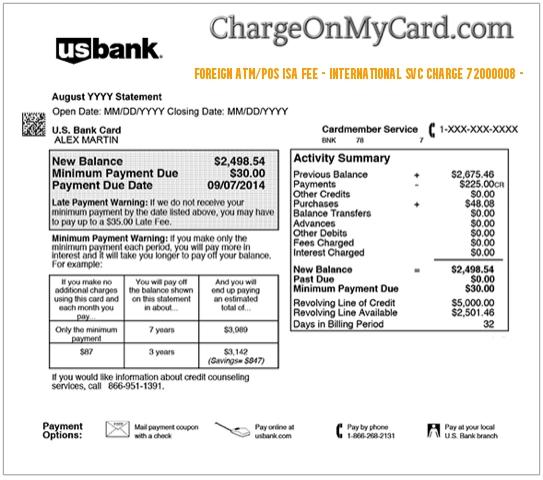
What Is the FOREIGN ATM/POS ISA FEE?
The FOREIGN ATM/POS ISA FEE is generally associated with an international transaction made using a credit card, debit card, or ATM card.
It may appear after:
- A purchase made while traveling outside the cardholder’s home country
- A withdrawal from an international ATM
- An online order from a merchant located outside the United States
- A purchase processed through an overseas bank or payment provider
- A hotel, airline, train, rental-car, restaurant, or retail transaction abroad
- A foreign subscription or digital service
- A refund or credit involving an international merchant
- A transaction settled in foreign currency
- A transaction converted into U.S. dollars by the merchant or ATM
The fee should normally correspond with another purchase, withdrawal, refund, or international transaction on or near the same date.
What Does ATM/POS ISA Mean?
The descriptor can be understood cautiously as follows:
- FOREIGN: Indicates an international merchant, transaction route, location, bank, or currency.
- ATM: The triggering transaction may have been an automated teller machine withdrawal.
- POS: Means point of sale and may refer to a purchase made at a store, terminal, website, application, or other merchant checkout.
- ISA: Commonly refers to Visa’s International Service Assessment.
- FEE or INTERNATIONAL SVC CHARGE: Indicates a separate international-service or foreign-transaction charge.
- 72000008: Appears to be an issuer-specific processing or reference value whose exact meaning has not been publicly documented.
Do not use `72000008` by itself to identify a merchant, country, ATM, card network, or account.
Common Statement Variations
Banks may shorten or rearrange international-fee descriptions.
Possible variations include:
- FOREIGN ATM/POS ISA FEE
- FOREIGN ATM POS ISA FEE
- FOREIGN ATM/POS FEE
- FOREIGN POS ISA FEE
- ATM/POS ISA FEE
- VISA ISA FEE
- VISA INTERNATIONAL SERVICE ASSESSMENT
- INTERNATIONAL SVC CHARGE
- INTERNATIONAL SERVICE CHARGE
- INTERNATIONAL SVC CHARGE 72000008
- FOREIGN TRANSACTION FEE
- INTERNATIONAL TRANSACTION FEE
- INTL TRANSACTION FEE
- INTL POS FEE
- INTERNATIONAL POS FEE
- FOREIGN PURCHASE FEE
- FOREIGN ATM FEE
- CROSS BORDER FEE
- CURRENCY CONVERSION FEE
These descriptions may not all represent the same rate or card network. Check the exact account agreement and ask the card issuer to identify the fee.
This Is Usually a Bank Fee, Not the Merchant Purchase
The merchant transaction and the international-service fee may appear as separate entries.
For example:
- A consumer makes a purchase from an international merchant.
- The purchase posts under the merchant’s name.
- The card issuer calculates the applicable foreign-transaction or international-service fee.
- A separate FOREIGN ATM/POS ISA FEE entry appears on the statement.
Contact the bank or card issuer—not the merchant shown only on the separate fee line—when the question concerns how the international fee was calculated.
The underlying merchant may still need to be contacted about the actual product, service, cancellation, refund, or transaction amount.
Can the Fee Appear Without International Travel?
Yes. The cardholder does not necessarily need to leave the United States.
A foreign transaction fee may be triggered when:
- An online merchant is legally based overseas
- The merchant uses a foreign acquiring bank
- The payment is routed through another country
- The order is settled in foreign currency
- A marketplace seller is located internationally
- A travel, software, gaming, hosting, telecommunications, or subscription company bills from abroad
- The checkout amount is displayed in dollars but processed internationally
A `.com` website, U.S.-dollar price, or English-language checkout does not guarantee that the transaction will be processed domestically.
How Much Is an ISA or International-Service Fee?
There is no universal consumer rate.
The amount depends on:
- The card network
- The issuing bank or credit union
- The specific card and account agreement
- Whether currency conversion occurred
- Whether the transaction was settled in U.S. dollars
- Whether the transaction was a purchase, ATM withdrawal, refund, or cash advance
- Whether the issuer adds its own foreign-transaction percentage
Network-level international assessments are sometimes approximately 0.8% to 1% in common examples, but the total fee passed to the cardholder may be higher. Some card agreements charge around 1% to 3%, while other cards charge no foreign transaction fee.
Use the exact pricing and fee disclosure for the affected card rather than relying on a general percentage.
How to Match the Fee With the Underlying Transaction
- Record the complete fee descriptor, amount, and posting date.
- Look for an international purchase or ATM withdrawal from the same date or several days earlier.
- Calculate what percentage the fee represents compared with each possible transaction.
- Check whether the original purchase was made in foreign currency or U.S. dollars.
- Review travel receipts, online orders, subscriptions, app purchases, and digital services.
- Check transactions made by spouses, family members, employees, and other authorized users.
- Review PayPal, Apple Pay, Google Pay, and other wallet histories when applicable.
- Ask the card issuer which transaction generated the fee.
- Request the merchant country, settlement currency, transaction type, and fee percentage.
- Compare the fee with the cardholder agreement or current fee schedule.
A bank representative should be able to identify the transaction to which the fee was attached even when the statement does not display that connection clearly.
Foreign Transaction Fee Versus Currency Conversion
These terms are related but not always identical.
Foreign Transaction Fee
A foreign transaction fee is generally imposed through the card issuer because the transaction involved a foreign merchant, foreign currency, or international payment route.
Currency Conversion
Currency conversion changes the transaction amount from one currency into another. The card network, bank, merchant, or ATM operator may perform the conversion depending on how the transaction was submitted.
Dynamic Currency Conversion
Dynamic currency conversion occurs when a foreign merchant or ATM offers to charge the consumer in the card’s home currency, such as U.S. dollars.
Choosing dollars may appear more convenient, but:
- The merchant or ATM may use its own exchange rate.
- A conversion markup may be included.
- The card issuer may still treat the transaction as international.
- An international-service fee may still apply.
Paying in local currency often allows the card network to perform the conversion, but it does not guarantee that the issuer will waive its foreign transaction fee.
Foreign ATM Fees Can Include Several Charges
An international ATM withdrawal may create more than one fee:
- The amount of cash withdrawn
- A surcharge imposed by the ATM owner
- An out-of-network ATM fee imposed by the consumer’s bank
- An ISA or foreign transaction fee
- A currency-conversion cost
- A dynamic currency conversion markup
- A cash-advance fee if a credit card was used
- Cash-advance interest charged by the credit-card issuer
Ask the bank to explain each separate statement entry. An ATM owner’s surcharge and the card issuer’s international fee are not necessarily the same charge.
Is a Foreign ATM the Same as an International ATM?
Not always.
In some banking contexts, a “foreign ATM” can mean an ATM outside the bank’s own network, even when the machine is located domestically.
However, wording that also includes:
- ISA
- International service
- International transaction
- Currency conversion
- Cross border
more strongly suggests an international or foreign-merchant transaction.
Ask the bank whether “foreign” refers to another country or merely an out-of-network ATM.
Why Are There Several International-Service Fees?
Several fee entries may correspond with:
- Several separate foreign purchases
- Multiple ATM withdrawals
- Separate transactions from one hotel or travel booking
- Several subscription renewals
- A purchase and later adjustment
- A refund processed as a separate international transaction
- Transactions made by more than one authorized user
- A repeated merchant submission
- A fee that was applied incorrectly
Match each fee to an underlying transaction. The issuer should explain any fee that does not correspond with a recognizable purchase or withdrawal.
What Happens When the Original Purchase Is Refunded?
A merchant refund and the international-service fee may be processed separately.
Possible outcomes include:
- The merchant refunds only the original purchase.
- The issuer automatically reverses the associated fee.
- The issuer leaves the original international fee in place.
- A new fee or exchange-rate difference appears when the refund is processed.
- The refund posts at a different converted amount because exchange rates changed.
Refund treatment depends on the card issuer’s terms and transaction processing. Ask the issuer whether the original fee will be reversed after the merchant credit settles.
Can You Cancel the FOREIGN ATM/POS ISA FEE?
This is generally a one-time transaction fee rather than a membership or subscription, so there is usually nothing to cancel.
To prevent future fees:
- Identify the underlying merchant or ATM transaction.
- Cancel any recurring international subscription directly with the merchant.
- Use a card that does not impose foreign transaction fees.
- Ask the bank whether international purchases can be blocked.
- Remove the card from an international merchant account when no longer needed.
- Use an in-network or partner ATM where possible.
Blocking international transactions can also prevent legitimate purchases and travel activity, so ask the issuer how the setting works before enabling it.
How to Question or Request a Fee Reversal
Contact the number printed on the back of the affected card and ask:
- Which transaction generated the fee?
- Was the transaction classified as ATM, POS, purchase, cash advance, or refund?
- Which country and currency were reported?
- What fee percentage was applied?
- Where is that percentage disclosed in the account agreement?
- Was dynamic currency conversion involved?
- Did the bank add a fee beyond the card-network assessment?
- Will the fee be reversed if the purchase is refunded?
- Can the fee be waived as a courtesy?
- Does the account offer a no-foreign-transaction-fee alternative?
A courtesy waiver is not guaranteed. The strongest correction request is one supported by an account-agreement error, duplicate assessment, refunded transaction, misclassified transaction, or unauthorized underlying purchase.
What If You Never Made the International Transaction?
The fee itself may be a clue that another unfamiliar transaction was processed internationally.
- Ask the issuer to identify the transaction linked to the fee.
- Check whether the fee and purchase are pending or completed.
- Ask all authorized card users.
- Review online orders, subscriptions, travel activity, wallets, and stored cards.
- Report the underlying transaction promptly if it was not authorized.
- Ask that the related international fee also be included in the investigation.
- Lock or freeze the card when appropriate.
- Ask whether the card number should be replaced.
- Monitor the account for additional foreign or small test transactions.
Do not dispute only the fee while ignoring an unfamiliar underlying purchase or withdrawal.
Credit-Card Dispute Guidance
Contact the credit-card issuer immediately when:
- The underlying purchase was unauthorized
- The fee was not disclosed in the card agreement
- The wrong percentage was applied
- The fee was charged more than once
- The bank cannot identify the related transaction
- A promised reversal did not post
Use the official guidance provided by the card issuer and keep copies of:
- The statement
- The cardholder agreement
- Merchant receipts
- Refund confirmations
- Chat transcripts
- Case numbers
- Written dispute correspondence
The Consumer Financial Protection Bureau provides official information about disputing a credit-card charge.
Debit-Card and Bank-Account Guidance
An international debit-card purchase or ATM withdrawal can immediately reduce the checking-account balance.
Contact the bank promptly when the transaction was unauthorized or incorrectly processed.
Ask:
- Whether the transaction was ATM or point of sale
- Whether a PIN, chip, contactless card, magnetic stripe, or mobile-wallet token was used
- Which ATM or merchant location was reported
- Whether surveillance or terminal records may be available
- Whether the card and PIN should be replaced
- How to submit an electronic-fund-transfer error claim
The CFPB provides official guidance about unauthorized bank-account and debit-card transactions.
How to Reduce Future International Card Fees
Before traveling or purchasing internationally:
- Review the card’s foreign transaction fee.
- Consider a card that does not charge foreign transaction fees.
- Check ATM network and reimbursement rules.
- Avoid using a credit card for ATM cash advances unless necessary.
- Compare local-currency pricing with dynamic currency conversion.
- Check whether a website processes payments outside the United States.
- Set transaction alerts.
- Keep receipts until every transaction settles.
- Check exchange-rate tools for an approximate conversion.
Useful official conversion tools include:
These tools provide estimates. The final rate, issuer markup, ATM fee, and international-service fee can still differ.
Consumer Reports and Experiences
There are currently zero visible public reports on this ChargeOnMyCard.com page.
The lack of comments does not establish that every fee is correct or incorrect. Each cardholder must compare the fee with:
- The underlying transaction
- The merchant country
- The settlement currency
- The cardholder agreement
- The issuer’s fee calculation
- Any ATM or dynamic currency conversion charges
ChargeOnMyCard.com cannot:
- Identify the transaction behind code 72000008
- Access a bank or credit-card account
- Calculate the issuer’s exact contractual fee
- Reverse an international-service charge
- Refund an ATM withdrawal
- Change a currency conversion
- Submit a credit-card or debit-card dispute
Frequently Asked Questions About the FOREIGN ATM/POS ISA FEE
What is FOREIGN ATM/POS ISA FEE on my statement?
It is generally an international transaction fee connected with a foreign ATM withdrawal, point-of-sale purchase, online merchant, foreign currency, or overseas payment route.
What does ISA mean?
ISA commonly means International Service Assessment, terminology associated with Visa international transactions.
What is international service charge 72000008?
It appears to be an international-service fee followed by an issuer-specific reference or processing code. The exact meaning of 72000008 has not been publicly documented.
Is 72000008 a merchant?
No reliable evidence identifies 72000008 as a merchant. Ask the card issuer which underlying transaction generated the fee.
Can the fee appear when I did not travel?
Yes. An online merchant, subscription, marketplace seller, or processor located outside the United States may trigger an international fee.
Why was I charged in U.S. dollars?
A transaction can be displayed or settled in dollars and still be classified as international. The merchant, acquiring bank, or payment route may be located outside the United States.
Is this the same as an ATM surcharge?
Not necessarily. An ATM owner surcharge, bank out-of-network fee, currency-conversion cost, ISA fee, and cash-advance fee may be separate charges.
How much should an ISA fee be?
The amount varies by card network, issuer, account, currency, and transaction type. Review the specific card agreement.
Why are there two international fees?
They may correspond with two purchases, two withdrawals, a purchase and refund, separate authorized users, or an incorrect duplicate assessment.
Will the fee be refunded when the purchase is refunded?
It depends on the issuer’s terms and processing. Ask whether the fee will reverse after the merchant refund posts.
Can I cancel this charge?
It is normally a completed transaction fee rather than a subscription. You may be able to prevent future fees by canceling the underlying recurring purchase or using a different card.
Who should I contact?
Contact the bank or card issuer using the number printed on the card. The issuer can identify the linked transaction and explain the fee.
Should I dispute the fee?
Question it when the underlying transaction was unauthorized, the amount does not match the account agreement, the fee was duplicated, or the bank cannot identify why it was imposed.
Related International and ATM Charge Guides
- ISPA/PIMDS Charge: ATM Withdrawal, Operator Fee, and PAI ISO Help
- Limassol CYP Charge: Cyprus Merchant and Foreign Transaction Help
- DB Vertrieb GmbH Charge: International Rail Purchase and Currency Help
- TRAVELOKA 3DS Charge: Travel Booking and International Payment Help
- How to Investigate an Unrecognized Credit Card, Debit Card, ATM, or Bank Charge
A foreign-transaction fee may appear separately from any of these merchant or ATM descriptors. The related guide should be used to identify the underlying transaction, while the card issuer should explain the fee.
Help Other Consumers Understand the ISA Fee
If you identified a FOREIGN ATM/POS ISA FEE, INTERNATIONAL SVC CHARGE 72000008, or similar entry, please share nonprivate information.
Helpful details include:
- The shortened descriptor without account references
- The general fee amount
- The percentage of the related transaction
- Whether it followed an ATM withdrawal or purchase
- Whether the transaction was made online or while traveling
- Whether the purchase was in U.S. dollars or foreign currency
- Whether dynamic currency conversion was selected
- Whether the issuer reversed or waived the fee
- How the bank explained code 72000008
Do not post card numbers, card-ending digits, bank-account information, PINs, security codes, passwords, authentication codes, complete transaction references, travel details, addresses, or complete statements.
Why Rely on ChargeOnMyCard.com?
ChargeOnMyCard.com researches confusing credit-card, debit-card, ATM, international-service, foreign-transaction, currency-conversion, merchant, authorization, refund, and bank-statement descriptions using current financial information, official consumer resources, payment terminology, and visible public reports.
We distinguish the card issuer’s fee from the underlying merchant purchase, foreign ATM withdrawal, ATM-owner surcharge, cash-advance fee, currency conversion, dynamic currency conversion, authorized-user transaction, and potentially unauthorized activity.
Last reviewed: July 15, 2026.
Disclaimer
ChargeOnMyCard.com is not affiliated with Visa, Mastercard, U.S. Bank, any card issuer, bank, credit union, ATM owner, merchant, currency-conversion provider, payment processor, cardholder, or financial institution. This article is provided for informational purposes only and is not financial, legal, banking, travel, currency, tax, fee, dispute, account-security, or fraud-prevention advice. Contact the applicable bank, card issuer, ATM operator, and merchant directly regarding a specific transaction.